Buying guide for best DJI drones
Ready to buy now? Shop the best:
I remember the first time I saw a drone flying through the air and thinking how cool it was. I also remember thinking that they were probably really expensive or complicated to fly. Owning one seemed out of reach.
Enter DJI drones. Today, the brand is the world leader of the consumer drone market, thanks to its range of sturdy, well-designed drones that are a joy to fly, even for an amateur like myself. If you're looking to get a DJI drone, whether it's for work or just a hobby, there are a handful of excellent choices that are affordable, easy to operate and can capture spectacular aerial footage.
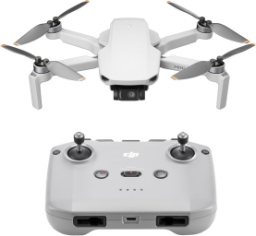
To help get you started, we've done the legwork and collected all the information you need to figure out which features matter most for your situation before you buy. Our top pick is the DJI Mini 4K, which offers impressive video quality and 31 minutes of flight time on a single battery.
Editors’ picks
DJI Mavic 3 Cine Premium Combo
Editors’ Favorite
Weight: 899 g | Maximum Range: 15 km | Dimensions: 13.7” x 11.1” x 4.2” | Video Resolution: 4K, 5.1K
The DJI Mavic 3 Cine is a sophisticated drone that’s perfect for filmmakers and professional content creators. It features a 4/3 CMOS sensor with a 12.8-stop dynamic range, allowing it to retain details in both bright and dark environments.
The battery life is terrific, with a flight time of approximately 46 minutes, and the transmission range can reach up to 15 kilometers. It has a built-in omnidirectional sensor to dodge obstacles, such as trees and buildings, and an O3 Plus transmission system for smoother live feeds at an HD resolution. The tele camera and 28x hybrid zoom provide extended reach capabilities, allowing you to record from farther away without sacrificing quality or detail.
It can record in stunning 4K or 5.1K resolution, and it features an intuitive function that allows it to position itself at a designated altitude to return to its home point safely. It’s expensive and much bulkier than other drones, but if you’re looking for advanced features and high-quality video, you won’t be disappointed.
DJI Mini 3 Fly More Combo
Great Value
Weight: 248 g | Maximum Range: 10 km | Dimensions: 14.2” x 9.9” x 2.8” | Video Resolution: 4K
The DJI Mini 3 is an excellent beginner-friendly model, and for under $1,000, you’d be hard-pressed to find a better drone. It’s one of the lightest and most compact DJI drones, weighing just 248 grams, and it boasts a maximum transmission range of 10 kilometers.
It can record in crisp 4K quality, and combined with the Dual Native ISO Fusion, the advanced sensor can capture stunning detail during the day and at night. True Vertical shooting lets you capture tall landmarks, such as skyscrapers, and the Level 5 wind resistance means it can withstand gusts as high as 38 kph. It’s also loaded with neat features, such as QuickShots for choosing dynamic flight patterns and QuickTransfer for transferring files to your smartphone via Wi-Fi.
Although there are drones with better resolutions and more advanced features, the DJI Mini 3 is the best bargain pick for beginners. It’s surprisingly durable, and the battery life is outstanding at 51 minutes. Plus, it comes with several accessories, including two Intelligent Flight Batteries.
DJI Neo
Simple Yet Solid
Weight: 135 g | Maximum Range: 10 km | Dimensions: 5.1” x 6.2” x 1.9” | Video Resolution: 4K
Those who don’t want to spend a lot of money on a drone should consider the DJI Neo. It’s a terrific beginner model with a lightweight design and a smaller learning curve compared to more sophisticated drones, such as the DJI Mavic 3 Cine.
The primary sensor is capable of recording video in 4K UHD, and the design makes operation super easy. All you have to do is hold it in your palm, press the flight button and off it goes.
QuickShots is an excellent feature for vloggers and content creators, as it allows the drone to follow you closely. Stabilization and Level 4 wind resistance make this drone a superb choice for most outdoor situations, ensuring smooth-looking recordings every time.
Whether you're looking for a budget-friendly drone or a beginner model, the DJI Neo is a fantastic option. The DJI Fly app allows you to control the drone from your phone, as well as edit your captured footage using pre-built templates. Plus, Return to Home ensures the drone safely finds its way back to you.
DJI drone features to consider
Camera
A camera drone is an unmanned aerial vehicle (UAV) that contains a built-in camera. Camera drones give you the ability to shoot video and still images and control it all with a remote. When you use a camera drone, you’re able to view the world in an entirely new way. You can see and record locations and perspectives not normally accessible. DJI has a large number of camera drones available.
To compare one camera drone to another, pay attention to the camera-related features in each model’s specification list. A drone with a better camera excels in the following.
-
Image sensor: A half-inch image sensor is about average when it comes to drone cameras, while a one-inch image sensor is above average. The larger size of the image sensor plays a huge role in the quality of the images.
-
Still-image resolution: A camera with a resolution of at least 12 megapixels will yield above-average results.
-
Movie resolution: Most newer drones can record and store movies with 4K video resolution, although 1080P is more common and “standard”.
-
ISO rating: A drone camera with a higher ISO number (such as 800, 1600, or higher) will perform well in low-light situations.
- Lens: Some drones have a zoom lens feature so you can magnify a scene without moving the drone too close.
Gimbal
The gimbal mechanism determines the stability of the camera on a drone. Entry-level drones have a two-axis gimbal, which doesn’t offer perfectly smooth video recording. Look for a DJI drone with a three-axis gimbal for the best results.
Wireless transmission
Most DJI drones give you the ability to see the live view from the drone’s camera on your smartphone or remote control screen. The best transmission systems operate over two frequency bands, so you can choose the one that has minimal interference each time you fly. Transmission distance is important, too, because it determines how far from the remote the drone can fly.
Flight features
You can find DJI drones with a few different features that make them easier and safer to fly. If you’re a novice, having some of the following features in your drone can help you avoid problems
-
Collision avoidance: This can help the drone automatically avoid trees and buildings.
-
Flight time: The battery capacity determines how long your drone can fly in one session before needing to recharge. Batteries that last 20 minutes or more are above average.
-
Return to home: This brings the drone back to you when the battery drains to a certain point. This feature helps make sure that you’ll never have so little battery power left that the drone can’t fly back to base.
- Tracking: Some DJI drones have a camera with a built-in tracking feature. The drone can fly automatically and keep the subject you’re tracking in the frame.
DJI drone prices
When purchasing a DJI drone, you can expect to pay between $500 and $2,000, with the more feature-rich drones at the higher end of that range. You can find drones from other manufacturers for less, but sticking with a well-known manufacturer like DJI has a few advantages, even if you pay more. DJI drones contain higher-quality parts than inexpensive brands, giving you better performance and longevity. More importantly, it will be easier to find name-brand replacement parts when you need them. If you purchase a little-known brand of drone, replacement parts could be scarce, making repairs difficult.
Entry-level drones
You can expect to pay between $500 and $1,000 for an entry-level DJI drone. These are aimed at beginners and have everything you need to start using them immediately, including remote and battery. Some of the newer entry-level drones can record 4K video, but HD video is more common.
Advanced drones
You can expect to pay $1,000 to $2,000 for a more advanced DJI drone. All of these drones have cameras with 4K video resolution. They also ship with a battery and remote control, so you can begin using them immediately. Some of these drones also come with goggles, multiple batteries, and other advanced accessories to make them easier to operate.
Ongoing costs
Depending on how often you use your drone and how many extra accessories you want, your ongoing costs could run anywhere from $50 to $300 per year.
-
Batteries: You might need replacement batteries after a year or two. If you want to be able to fly your drone for longer periods of time, you’ll want to purchase extra batteries immediately. (Most drones are limited to 20 to 30 minutes of flying time on one battery charge.)
-
Goggles: Some people prefer using goggles to control the drone rather than a remote control. Most kits don’t ship with goggles, so you’d have to pay for them separately.
-
Propeller guards: You might want to add propeller guards to protect these delicate parts of the drone.
-
Memory card: You’ll also need a memory card to store the photographs and videos recorded by the drone’s camera.
- Repairs: No matter how careful of a pilot you are, you’re going to crash the drone at some point, which means you’ll have repair costs and need to purchase replacement parts occasionally.
FAQ
Q. How can I keep my DJI drone safe from crashes?
A. Careful piloting can only take you so far when trying to keep your drone safe. Sometimes, a crash simply isn’t avoidable. If you want to reduce your chance of crashing the drone, look for a DJI drone that has an advanced obstacle-avoidance system. Also, the quality of the remote control plays a big role in helping you control the flight path properly.
Q. How do I know if the DJI drone has a high-quality camera?
A. The image sensor (the chip that records the photos and videos) is the key component of any digital camera, including a drone camera. Image sensors are available in a few different sizes, and larger ones will outperform smaller ones – but bigger isn’t always better. Read through the specifications for the DJI drone to find the image sensor size.
Q. Do I want a large or small DJI drone?
A. A larger drone will give you a smoother flight than a smaller drone because the wind won’t affect the heavier drone as much. However, on average, a larger drone costs more upfront. If you want to transport the drone to remote locations, a large drone can be difficult to pack and carry over long distances. For travel or hiking, a smaller, lighter drone is preferrable.
Q. Why do drones have such short flying times?
A. Newcomers to drones might be surprised to learn that even top-level camera drones can’t fly more than 25 to 30 minutes without needing to recharge. Flying time for any drone is limited by the capacity of the unit’s battery. Recording video continuously reduces flight times, so drones that have cameras need even more battery power. Have extra batteries on hand so you can swap out a dead battery for a fresh one and continue flying.