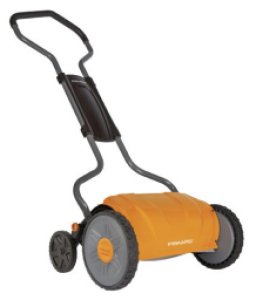
Buying guide for Best reel mowers
I may have been too young to recall a time when reel mowers were in every garage or shed. As far as I can remember, it's been all gas- or battery-powered units. But I tried my friend's reel mower the other day, and I'll admit I was shocked at how well it handles the job.
To my surprise, reel mowers are still very much a thing, and many people prefer them because they're so much more straightforward. They're quieter, eco-friendly, and you don't need to plug them, gas them or charge a battery to get them going.
With so many choices, it can be difficult to determine the best option for you and your lawn. That’s where BestReviews comes in. We’ve made it our mission to help consumers like you find the products you need.
Reel mower considerations
Yard
The first thing you have to figure out is whether a reel mower is right for your yard.
-
If you have a small to medium-sized yard that’s relatively smooth and flat, a reel mower will work just fine.
-
If you have a yard that’s rocky, bumpy, or full of weeds, a reel mower won’t work as effectively and you’ll be left with a patchy lawn. That’s because reel mowers lack the cutting force of traditional rotary lawn mowers.
-
If you have a large yard, a reel mower also isn’t ideal simply because it will take much longer to cut. These machines usually can’t cut as wide of an area at a time, and they rely entirely on you to propel them, as opposed to rotary mowers that are often self-propelling.
If you don’t think a reel mower is right for your yard, you may want to check our review of the best rotary lawn mowers instead.
Blades
Reel mowers have either four, five, or seven blades, with five the most common. The right number for you depends on the type of grass you’re cutting.
Sharpening
All lawn mowers need their blades sharpened periodically, and this is true of reel mowers as well. But how often they need sharpening depends on the type of mower you get.
Reel lawn mowers fall into two types: contact and no-contact (or silent cut). This refers to whether or not the blades make contact with the mower’s bedknife.
Contact mowers
No-contact mowers
-
Don’t require backlapping.
-
Don’t need to be sharpened as often (These don’t get dull as quickly thanks to a space between the blades and the bedknife. But at least once a year, you must adjust this space in order to keep the machine functioning properly.)
"You don’t need to saw the mower back and forth. Modern reel mower blades are sharp enough that you can walk at a normal pace, and you don’t have to go over the same spot multiple times."
STAFF
BestReviews
Width
The wider your reel mower, the less time you’ll spend mowing because you can cut a larger swath at once. Most reel mowers are between 14 and 18 inches wide, but you can find some as narrow as 12 inches and as wide as 20 inches.
But while wide reel mowers will cut down on your mowing time, they aren’t as easy to maneuver as narrower models. If you have a lot of trees or obstacles in your yard that you need to mow around, a narrower reel mower may suit you better.
Weight
While most reel mowers on the market today are pretty lightweight, you should make sure that you’ll be able to push around the model that you choose. One downside to going with a larger reel mower to shorten your mowing time is that it’s also heavier. And don’t forget to think about the other members of your household who will be using the lawn mower as well.
Adjustability
Most reel mowers enable you to adjust the height of the blades, enabling you to choose how short you want your grass to be. This is usually done with a lever on the base of the machine that raises or lowers the reel.
Think about how tall you want your grass to be and make sure you choose a machine that can accommodate this. If you’re not sure, go with a mower that has multiple settings so that you can try them out and decide which one is best.
Setup
Setup is a relatively minor detail, but if you’re not particularly handy, you don’t want to purchase a reel mower with a bunch of little pieces that are difficult to assemble. Make sure the model you choose comes with detailed instructions so you can get it up and running quickly.
Grass catcher
If you prefer not to leave your grass clippings in your lawn, or you use them for fertilizer, you should look for a mower that includes a grass catcher. This is a small bag that fastens to the back of the mower and collects all of the clippings as you go. It’s usually detachable, so you don’t have to use it if you don’t want to.
Did you know?
Weeds, sticks, and rocks are all problems for reel motors. Clear your yard of these obstructions before you start mowing.
STAFF
BestReviews
Reel mower prices
Reel mowers can cost anywhere from $50 to $200, depending on the type you buy.
-
You can find a narrow, five-blade reel mower for between $50 and $75.
-
For about $75 to $80, you can find basic reel mowers and feel relatively confident that you’re purchasing a durable machine that will hold up well over time.
- If you’re looking for something with advanced features like a grass catcher or adjustable height, you’ll end up paying between $80 and $200.
Expert Tip
If your lawn is larger than 5,000 square feet, it may take you too long to cut all the grass with a reel mower.
STAFF
BestReviews
Tips
-
Mow on a schedule. Your reel mower will be more effective if you mow about once a week instead of waiting until the grass is very tall.
-
Mow weeds when they’re small. If dandelions or other weeds crop up in your yard, your reel mower may not be powerful enough to cut through them. Try to tackle them when they’re small, or else consider pulling them up by hand.
-
Wipe off your mower blades periodically. This helps keep them clean and will keep your mower working at its best.
-
Don’t cut more than a third of the height of the grass. Cutting it shorter can make it difficult for your grass to grow back.
- Remove all sticks and rocks from the area before you mow. The reel mower could be damaged if it runs over stones or other obstacles.
FAQ
Q. Is a reel mower a good choice for a small lawn?
A. Yes, if you can mow regularly and your lawn is reasonably level and clear of sticks. The Great States 415-16 has a 16-inch cutting width, giving you a useful middle ground between covering ground quickly and maneuvering around a small yard. Reel mowers don't need fuel, charging, or an extension cord, but you supply the power. If you often let grass get tall or have a rough, debris-filled lawn, a powered rotary mower will usually be less frustrating.
Q. Is a wider reel mower always better?
A. A wider cutting path reduces the number of passes, but it can be harder to steer through narrow gaps and around beds. The 14-inch American Lawn Mower 1204-14 suits tight spaces where maneuverability matters more than speed. Before choosing, measure the narrowest passage you'll need to mow and consider the mower's overall width, including its wheels. A wider mower saves little time if you have to keep backing up or finish awkward areas with another tool.
Q. What's the difference between four- and five-blade reel mowers?
A. The number of blades affects how often the reel cuts as it rotates, but blade count alone doesn't tell you how well a mower will suit your grass. The American Lawn Mower Company 1304-14 uses a five-blade reel, while some similarly sized models use four. Compare the supported grass types, cutting-height range, and blade adjustment as well. A correctly adjusted mower used at the right height will matter more than buying an extra blade and expecting it to handle an overgrown lawn.
Q. Should I collect reel-mower clippings or leave them on the lawn?
A. Short, evenly scattered clippings can stay on the lawn; collecting them is useful when they clump or you want a tidier finish. The Remington RM3100 includes a grass catcher, giving you that option without raking afterward. Collection isn't the same as mulching: the catcher gathers clippings rather than chopping them into finer pieces. You'll need to empty it as you work, and a reel mower won't collect every clipping as effectively as a powered mower with suction.
Q. Do reel-mower blades need sharpening?
A. Yes, although the schedule depends on the blade design, adjustment, use, and debris in your yard. The Fiskars 17-Inch StaySharp uses a cutting system intended to reduce blade wear, but you should still follow its maintenance instructions rather than treating it as maintenance-free. If grass looks ragged or the mower misses patches, check for trapped debris and improper blade adjustment before assuming sharpening is the answer. Use the procedure specified for your model; a rotary-mower sharpening method isn't interchangeable.