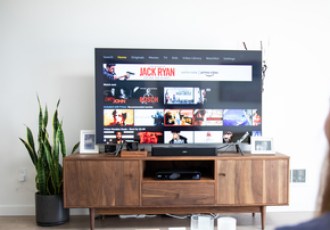
Buying guide for best frame TVs
Ready to buy now? Shop the best:
You’ve got your living room looking just the way you want, but there’s one thing that can throw everything off: your TV.
I’ve been a fan of frame TVs because they’re slim enough to blend in with your decor and they let you display artwork when you’re not watching anything instead of having a black screen dominate the room.
Picture quality is still important, especially if you want the artwork to look convincing. Other key considerations include how easy the TV is to mount, how far it sticks out from the wall and whether the screen size makes sense for the room. You don't want a tiny TV for your living room or a giant TV for your bedroom.
In this guide, I’ll walk you through what to look for when choosing a frame TV for your home. There are plenty of options out there, but Samsung’s The Frame is definitely my top pick.
New release
Samsung The Frame Pro (2026)
Screen Size: 65” | Resolution: 3840 x 2160 px | Panel Type: Neo QLED | Refresh Rate: 144 Hz VRR | Voice Assistant Integration: Alexa, Bixby
A new Frame model from Samsung is always welcome. We were able to get some hands-on time with the 2026 Samsung Frame Pro recently and came away impressed by its many new features, including Neo QLED and cable-free setup.
The new Frame Pro, model LS03HW, leads with a Neo QLED display panel with micro dimming that’s new to the Frame lineup. During our time with it, the image seemed much brighter and more lifelike than any Frame we had before, and its upgraded matte finish truly made its artwork display mode seem realistic. We also appreciated the wireless One Connect box that can be located up to 30 feet away, leaving the display hanging on the wall without a single wire to be seen.
If you’ve been concerned about having an art TV that’s just on all day, the Frame Pro can turn itself on only when it senses a person in the room. It has a pair of 40-watt speakers, and it supports ALLM, VRR, AMD FreeSync Premium Pro and Samsung’s gaming hub if you’re a gamer. As with previous models, you can swap the border of the Frame Pro with an assortment of magnetic options.
Key considerations
Art display
The entire point of a frame TV is that, when you’re not enjoying shows and movies in your home theater, the frame looks like a work of art. Some manufacturers allow you to select famous works of art from a gallery they maintain. Often, there is a monthly charge to borrow from the gallery. If you object to paying a monthly fee just to display The Starry Night on your set, you can upload artwork and photos yourself. However, this can be tricky, and some models can only display a single photo or painting at once while others can cycle through many pieces.
Mounting
Most people choose to wall-mount their frame TVs, though all sets come with an optional base if you'd prefer to use a TV stand. Mounting is relatively simple, and the set should include the necessary hardware. However, we recommend calling in a professional if you feel uncomfortable with setup. Because they must mount flush with the wall, frame TVs are extremely thin. An accidental drop could see your new purchase smashed to the floor.
One slight annoyance is that frame TVs still have wires running about, so your new TV might not look quite as picture-perfect as you imagine.
Size
Frame TVs come in various screen sizes, from 30 to 75 inches. TV sizes are measured diagoally, so potential buyers should note that a 40-inch TV measures 40 inches from the top left corner to the bottom right corner but only 35 inches across.
A smaller set of 32 to 45 inches may suffice in a small room or if you watch little TV. For the average living room, however, a range of 55 to 65 inches is ideal, especially if you enjoy movies and video games. Anything larger than a 65-inch TV is suitable for great rooms, huge living rooms, and elaborate home theaters. In any other space, however, such a television might overwhelm the space.
Picture quality
Resolution: Since frame TVs display high-quality images, it is difficult and perhaps impossible to locate one that offers less than 4K resolution. Older HD models with 720p or 1080p are outdated and best avoided, but what about 8K? The picture quality of 8K TVs is certainly impressive, but little to no 8K content is yet available. That said, some TVs do offer upscaling for the little bit of 8K content that does exist.
High dynamic range (HDR): HDR TVs offer a greater range of colors. Images are bright, vibrant, and closer to real life. HDR also makes the piece of art displayed look fantastic.
Refresh rate: This is measured in hertz (Hz) and reflects the number of times per second your set refreshes an image. A higher rate results in less motion blurring, which is preferred for watching sports, fight scenes, and fast-moving action. For the majority of TVs, the rate is 60 hertz, though manufacturers employ a range of methods to increase the effective rate. The trouble is, no single way to measure the rate exists, so it doesn’t mean that much or reduce blurring significantly. That said, you can find some TVs with a true refresh rate of 120 hertz, which does reduce blurring.
Features
Smart home compatibility
Some frame TVs come equipped with a digital assistant like Alexa. It's also useful if your TV offers compatibility with your existing smart home system.
Built-in storage
All TVs that can download apps and other data offer internal storage. Somewhere around 8 gigabytes is enough space for a wide range of apps and artwork.
Frame colors
Some frame TVs allow you to choose a frame color and finish to match your existing décor.
Frame TV prices
Frame TVs are pricey, though you can find more affordable options if you select a smaller size.
Inexpensive
Compact 32- to 43-inch sizes start between $600 and $1,000.
Mid-range
Between $1,000 and $1,500 is the middle range, where TVs measure roughly 50 to 55 inches.
Expensive
Expect to pay $1,500 to $2,500 for the best TVs with the largest frames (60 to 75 inches).
Tips
- Unplug your frame TV when not in use for longer periods. For instance, unplug it if you're going away on holiday.
- Consider a soundbar. If the audio quality on your new frame TV isn't up to scratch, consider purchasing separate speakers or a soundbar.
- Check for monthly artwork fees. You should be able to upload your own pieces in art mode, but some manufacturers charge a monthly fee for the use of their gallery.
- Check that you have enough HDMI ports. You'll need one for each console, Blu-ray player, and other relevant device. You could switch them out if you don't have enough HDMI ports, but this is a tedious practice.
FAQ
Q. What's the difference between edge lighting and full-array lighting on an LCD screen?
A. All standard LCD screens must be backlit to illuminate the picture on the screen. Otherwise, it would just look dark. Edge lighting is located just around the perimeter of the screen, while full-array lighting is placed all over. Edge lighting is cheaper to produce and results in a thinner screen, but it can cause contrast issues, with the screen edges looking brighter than the center.
Q. Can a frame TV really look like a piece of high-quality art?
A. For some buyers, the main reason to purchase a frame TV is so it will look like a convincing piece of art when not in use, but do frame TVs live up to this promise? It depends on the model you choose. High-quality frame TVs really can look like prints or prints of paintings from a distance, though they cannot look like original oil paintings due to a TV screen’s lack of texture.
Q. What's the deal with HDMI 2.1?
A. This newer version of HDMI allows you to transfer more data faster. It allows for 8K HD, faster console gaming, dynamic scene-by-scene HDR, and quicker switching between connected devices. Not many TVs or devices use it yet, but if you want to future-proof your new frame TV, choose a model with at least one HDMI 2.1 port. If your TV already has them, there's no need to worry about replacing your standard cables and devices since it will be backward compatible.
Our expertise
Lauren Corona has been a writer at BestReviews for six years. She has extensive knowledge of art and design, cooking, kitchen equipment, fashion and pet care. Her work has been featured in Bon Appétit and New York Magazine’s The Strategist.
Kevin Luna has a love for all things tech, sports, fitness and gadgets. As a longtime writer for BestReviews, he enjoys writing engaging, high-quality guides to help shoppers make smart buying decisions.