Buying guide for best brake rotors
Ready to buy now? Shop the best:
There are three main parts to your vehicle's braking system: the caliper, brake pads and rotor. All three work together to create the friction needed to reduce a vehicle’s momentum. When you step on the brake pedal, brake fluid flows to the caliper. This activates pistons that squeeze the brake pads against either side of the rotor, pinching it to slow its rotation. It’s a precise and vital process — and good brakes and rotors are essential to making it happen safely and consistently.
While it might not sound like brake rotors are a big deal, you wouldn't be able to stop a vehicle without them. Furthermore, if rotors are improperly designed, they retain too much heat during normal operation. That excess heat can glaze, melt or degrade the brake pads. High temperatures can also reduce brake fluid effectiveness, leading to less responsive braking. In short, if you're noticing braking issues or heat buildup, it's time to look for the best replacement brake rotors for your vehicle.
For optimal performance, quality brake rotors need to be durable, reliable under stress, and able to dissipate heat efficiently while offering a smooth, vibration-free stop. To meet those needs, rotors come in several design variations: blank (also referred to as smooth or plain), drilled, slotted, and drilled and slotted. Each rotor style has its advantages and potential drawbacks, depending on how you drive. For instance, best slotted rotors may serve better in high-performance or towing applications, while plain rotors from top rotor brands are ideal for daily commuting.
Choosing the best brake rotors doesn’t need to be overwhelming. Understanding the types available and how they suit your specific driving style makes all the difference. It’s also helpful to be aware of potential downsides. Would you be satisfied with top rated brake rotors that offer powerful stopping performance but may wear out faster or make more noise? Or do you prefer good brake rotors that strike a balance between performance and longevity?
Once you decide what you need and what is acceptable, you'll be able to purchase the best option with confidence. While we highly recommend the Raybestos Element3 Replacement Front Brake Rotor, we've also found some other great options that might suit your needs and budget better.
Editors' Picks
Part number: 580279FZN | Position: Front | Material: Cast iron | Coating: Grey Fusion 4.0 | Included components: 1 coated brake rotor
The Raybestos Element3 Replacement Front Brake Rotor is a strong pick for drivers who want a dependable rotor that can better handle rough weather, road salt and everyday wear. Its coated design is the main appeal, especially for people in rust-belt states where uncoated brake parts can start degrading quickly.
It's still a vehicle-specific replacement part, so fitment matters, but for the right application, it gives shoppers a practical mix of durability, stopping confidence and corrosion resistance. The tradeoff is that this is a rotor only, not a full brake kit, so you may still need pads, hardware or other parts depending on the job.
It's best for drivers who are replacing worn front rotors and want something more protective than a bare-bones economy option. If you want a complete one-box brake refresh, a kit may be easier. But for rust-prone areas, this Raybestos rotor is a sensible upgrade.
Part number: 10PR1201493 | Position: Front and rear | Front rotor diameter: 12.99 in. / 330 mm | Rear rotor diameter: 13.58 in. / 345 mm | Kit contents: 4 drilled/slotted rotors, ceramic pads, hardware, cleaner, brake fluid
The Detroit Axle Brake Kit for Chevy and GMC Silverado/Sierra Trucks is a practical choice for those who want more than a single replacement rotor. Because it bundles key brake components together, it can make a front- or full-brake job feel simpler than piecing parts together one at a time.
For compatible trucks, the main appeal is value: You get the parts needed for a bigger refresh without having to hunt down matching pads and rotors separately.
The tradeoff is that buyers need to confirm the exact year, trim, drivetrain and brake setup before ordering, because Silverado and Sierra compatibility can vary more than the product description suggests. It's best for truck owners doing a planned brake replacement who want a straightforward parts bundle. If you only need one rotor or one axle’s worth of parts, this may be more kit than you need.
Part number: 18A1659A | Position: Front | Rotor type: Vented | Material: Cast iron | Outside diameter: 296.05 mm
The ACDelco Silver 18A1659A Front Disc Brake Rotor is a solid replacement option for drivers who want a straightforward rotor from a familiar parts brand. It's built more for dependable daily driving than flashy performance, which makes sense for commuters and family vehicles that just need smooth, predictable braking.
The OE-style approach is the appeal here: It's meant to replace a worn rotor cleanly without turning the brake job into an upgrade project. However, this is still just one front rotor, so it won't cover pads, hardware or the other side of the axle unless you buy matching parts separately.
It's best for shoppers who already know this rotor fits their vehicle and want a familiar, no-drama replacement. If you are chasing premium coatings or a full kit, there are more complete options, but this ACDelco rotor keeps things simple.
Product line: Bendix Premium | Position: Front | Rotor design: OE-style vane configuration | Balance: Tested for safe operation | Wear marker: Edge-coded discard thickness
The Bendix Premium Front Brake Rotor is a good match for Hyundai and Kia owners who want a reliable replacement part without overcomplicating the repair. It's designed as a front rotor for specific applications, so the big value is in getting a properly matched part that restores smooth braking for normal daily driving.
For commuters, students or family cars, this kind of straightforward rotor is often exactly what the job calls for. That said, it's not a full brake kit, and it's not trying to be a performance upgrade. You'll still need to confirm fitment and pair it with the right pads and hardware if those parts are due for replacement too.
It's best for buyers who want a trusted replacement rotor for routine maintenance. If you need pads, clips and rotors all together, a bundled kit will be more convenient.
Part number: K6268-36 | Position: Front and rear | Pad material: Z36 carbon-fiber ceramic | Rotor style: drilled and slotted | Finish: zinc plated
The Power Stop Brake Kit for 2012-2018 Ford F-150 6-Lug Models is a strong option for truck owners wanting a more complete brake refresh in one package. Instead of buying pads, rotors and hardware separately, this kit is built around convenience and value. That makes it especially useful for F-150 drivers planning a bigger service job and wanting the parts to work together from the start.
The tradeoff is that you'll need to confirm your truck is a 6-lug compatible model before ordering. It's also more than you need if only one rotor is worn or if your pads still have life left. But for the right F-150, this Power Stop kit is a practical way to replace the main wear parts at once and avoid a piecemeal brake job.
Part number: BKA14587 | Position: Front | Pad material: Ceramic | Kit contents: 1 front ceramic brake pad set and 2 front brake rotors | Item weight: 34 lb
The TRQ Front Ceramic Brake Pad and Rotor Kit is a sensible pick for shoppers who want pads and rotors matched together for a front brake job.
The ceramic pads are the practical highlight, since they are generally aimed at smoother, quieter braking and lower dust than some more aggressive pad types. For daily drivers, this kind of bundled kit can be easier than trying to match separate parts from different listings.
If you need rear parts, too, or if your vehicle requires a different rotor size, this will not solve the whole job. But for a compatible vehicle, the TRQ kit keeps the repair simple and well organized.
Part number: 50011479 | Position: Front | Diameter: 328 mm / 13.39 in | Material: Cast iron | Finish: Zinc
The Bosch 50011479 QuietCast Premium Disc Brake Rotor is a good fit for drivers who want a replacement rotor from a well-known brake-parts line. The QuietCast name is the main draw, since Bosch positions these parts around smooth, quiet everyday braking rather than bargain-basement replacement. For commuters or family vehicles, it's the kind of rotor that makes sense when you want braking to feel normal and predictable again.
The tradeoff is that this is not a complete brake kit, so pads and hardware need to be purchased separately. It also needs to match the exact vehicle application, which is especially important with brake parts.
It's best for those who want a premium-feeling replacement rotor without stepping into performance or specialty parts. If you want everything in one box, a kit will be easier.
Part number: 50011501 | Position: Rear | Diameter: 309 mm | Material: cast iron | Finish: zinc
The Bosch QuietCast Disc Brake Rotor is a straightforward replacement rotor for drivers who care most about smooth, quiet braking in normal everyday use. It's not trying to be a race-inspired part or a heavy-duty truck kit; the appeal is a familiar brand, a daily-driver focus and a design aimed at restoring clean brake feel when an old rotor is worn or warped.
For compatible vehicles, it's a practical maintenance pick. The tradeoff is that it covers only the rotor, so you'll still need pads, clips, or a matching rotor for the other side. Fitment also needs to be checked carefully before purchase.
It's best for those replacing a worn rotor who want a quiet, dependable option from Bosch. If your brakes need a full overhaul, a pad-and-rotor kit may save time, but this rotor makes sense for a targeted repair.
What to know before you buy brake rotors
What they are
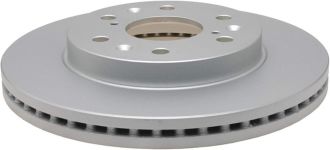
Brake rotors are round metal discs that you might be able to see inside each tire on your vehicle, especially if you don’t have hubcaps. Remove a tire and you can clearly see the brake rotor. It’s part of the wheel, which connects to the vehicle’s axle. As the axle rotates, the wheels rotate, propelling the vehicle forward. When you stop, the brake rotor and braking system come into play.
On most cars, the rotors are cast iron, like the Raybestos rotor on our list. High-performance vehicles might use brake rotors made of reinforced carbon or ceramic composites, such as the Power Stop and R1 Concept sets, because they reduce weight.
How a braking system works
The rotors are only part of the braking system that slows and stops your vehicle. The braking system uses a caliper with two brake pads attached to it. Pressing the brake pedal activates the master cylinder, which sends brake fluid through the brake lines to the caliper. This action presses the brake pads against the brake rotor, creating friction. Because the rotor is connected to the wheel hub assembly, this friction eventually stops the tire from spinning. When you release the pedal, the caliper piston retracts, disengaging the friction between the pads and the rotor, and the wheel moves freely again.
Types of brake rotors
When selecting new brake rotors, you can pick from four primary types: blank, smooth or plain; drilled; slotted; and drilled and slotted.
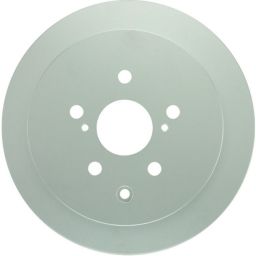
Blank or smooth brake rotors are the most common rotors on the market. They are often available by top brands such as Bosch and ACDelco. They have a smooth design that offers the most surface area for the brake pads to grip. Plain brake rotors, in turn, provide reliable friction and stopping power, making them an effective and economical choice for average use situations.
The downside of blank brake rotors is they have no built-in features to dissipate heat or help get rid of gasses, dust or debris. Since the heat created by braking can diminish the effectiveness of your brake fluid as well as the life of your brake pads, smooth brake rotors are not the best option for any type of high-performance driving. This includes any commutes that require frequent or quick stops.
Drilled brake rotors have holes drilled through the rotor disc to allow the friction-generated heat to dissipate more quickly. Excessive heat around the brake rotors and pads can cause the system to work less effectively. The holes in the brake rotors also allow water to pass through. When driving on wet roads, the brake rotors could become slippery if they stayed wet. The water dissipates more quickly when the rotor has holes.
The downside of drilled brake rotors is that rotors with holes have less surface area to generate friction between the rotor and the pads, which could cause the brakes to work less effectively. Also, if not drilled correctly, the holes can weaken the structure of the rotor. Therefore, drilled rotors are generally not recommended for high-performance or track driving due to the risk of cracking under extreme conditions.
Slotted brake rotors have thin slots or lines in the surface. These slots aren’t deep enough to weaken the brake rotor, but they’re just the right depth to help remove water and heat. You’ll find slotted brake rotors more often on high-performance vehicles where the rotors are under excessive stress. However, slotted rotors can lead to quicker brake pad wear and are often noisier, which might be a deterrent for some drivers.
The downside of slotted rotors is that the brake pads tend to wear out more quickly versus pads on drilled rotors. Also, on average, slotted rotors are more expensive than drilled.
Drilled and slotted brake rotors have both of the previously mentioned features. The benefits are that these rotors remain cooler and are much better at removing moisture, gasses, debris and more. They help prevent overheating, which reduces the chance of building up a low-friction glaze, so the brakes perform much better in high-demand situations.
The downside of drilled and slotted brake rotors is that they are the most expensive and the least durable — cracking may occur between the drilled holes. Also, though you probably won't notice it much, these rotors can be louder and feel less smooth when applying pedal pressure.
When to replace brake rotors
You can’t always tell if the brake rotors are too worn just by looking at them. However, there are clear signs you can look for when trying to decide whether you should replace the rotors.
Measure the wear. The original thickness of the rotor should be listed in the vehicle owner’s manual. You can measure the wear on brake rotors using a micrometer, which is more accurate than a basic tape measure. This type of calliper will tell you the exact thickness of the material to a fraction of a millimeter. Take four to six measurements around the rotor. Always measure where the brake pads have touched the rotor.
If the brake rotor has worn down beyond acceptable limits or if the wear is uneven, it needs to be replaced.
Listen for odd noises. If your brakes make loud whining or squealing noises, this can be a sign of a failing brake pad, but it can also signal a brake rotor problem. Sometimes this high-pitched noise is caused by metal on metal: the brake pad has been completely worn down, which will eventually cause the brake rotor to fail. The rotor needs a functioning brake pad in order to work. A poor-quality or worn brake pad also can cause grooves to appear in the surface of the rotor, which can sometimes cause a high-pitched noise. If the grooves become deep enough, the rotor must be replaced.
Notice any vibrations. If your vehicle shakes when you apply the brakes, this points to a warped brake rotor or underinflated or weakening tire. If the rotor is causing the vibration, it means the rotor has suffered wear on some part of the surface and is no longer a uniform thickness.
FAQ
Q. How much do brake rotors cost?
A. You have two options: you can pay a mechanic to replace them, or you can install them yourself.
Most mechanics recommend replacing at least two brakes (on the front or rear wheels) at the same time. A complete brake system replacement, including pads, caliper and rotors, costs between $350 and $700 per wheel (each wheel has its own brake system). If you’re only having the brake rotors replaced, it costs about $150 to $300 per wheel. At the very least, most mechanics will recommend replacing the pads and rotors at the same time, which costs about $200 to $400 per wheel.
If you go the DIY route, average-quality brake rotors cost anywhere from $25 to $85 each. These are basic models made for lightweight vehicles. Examples in our top five are ACDelco Silver, ACDelco Gold and Raybestos rotors. High-end rotors cost $200 to $250 each. The more expensive brake rotors are made of better quality materials or are specialty rotors for certain vehicles.
You can also purchase rotors for your DIY auto project in sets that include two rotors for the front or back wheels. Some may also come with brake pads. These sets range between $140 and $400 depending on the brand and quality. Power Stop and Weize makes rotor sets that we chose for our list of favorites.
Q. How long do brake rotors last before needing replacement?
A. The longevity of brake rotors varies greatly from vehicle to vehicle. If your car uses especially rough or aggressive brake pads, the rotors will wear down more quickly. If your vehicle’s manufacturer used low-quality materials to make the brake rotors, such as poor-quality cast iron, the rotors will wear more quickly. On average, brake rotors last for 30,000 to 75,000 miles, but some high-quality rotors can last even longer.
Q. Can I change out brake rotors myself?
A. Choosing the DIY option will save you quite a bit of money over going to a mechanic, but replacing rotors requires some auto repair know-how and specialized tools. Purchasing tools or renting space at a DIY garage will drive up the cost.
Before buying any type of brake rotor, make absolutely sure it’s compatible with your vehicle’s make and model. The hub attached to the rotor is a different size and thickness depending on the vehicle.
Then you need to be able to safely jack up the vehicle, and you need to know how to remove brake fluid. You have to remove several large bolts, so you’ll need the right tools on hand for that. This is an intermediate-level DIY job, so you’ll have better success if you already have some experience working on vehicles.
Q. How long does it take to swap out brake rotors?
A. When changing brake rotors, you’ll probably also change the brake pads. For an experienced mechanic, the process can take between half an hour and an hour and a half for two wheels. If you haven’t worked on vehicles a lot, the process could take twice that long for two wheels. Novices might need even longer, especially if they don’t have the proper tools.