Buying guide for best hiking poles
Ready to buy now? Shop the best:
Hiking gets you out into the great outdoors, as well as being a good workout. Whether you choose to take on the mountain or the forest, hiking, or trekking, poles can help you navigate and balance over a variety of terrains, such as inclines, water crossings, and rocks, as well as safely navigate snow and slippery footing conditions.
An added bonus is that the additional movement helps create an all-body workout using arms, back, and shoulders, resulting in a more intense Nordic-style exercise. Since the poles help with balance, they can also help ease the strain on knees and the back, especially if you are also carrying a backpack.
Hiking poles should be strong enough to lean on for support yet light enough to enable you to walk with them for long periods without tiring. Many hiking poles fold or collapse onto themselves, creating a smaller size that’s easy to transport when not in use.
We’ve looked at a wide range, so check for features that suit your needs, like rubber tips, backpack attachment straps and snow discs. Our top pick is the MSR DynaLock Ascent Foldable Carbon Backcountry Trekking Poles.
Editors' Picks
MSR DynaLock Ascent Foldable Carbon Backcountry Trekking Poles
Edit Product Widget
Material: Aluminum, cork | Extended Length: 49.2" | Shaft Material: Aluminum | Weight: 1.1 lb
The MSR DynaLock Ascent Foldable Carbon Backcountry Trekking Poles are a solid choice for hikers and backpackers who want a light pole that still feels dependable on rough ground. The aluminum shafts keep the weight down without feeling flimsy, and the FlickLock system makes it easy to fine-tune the length.
The folding Z-Pole design is convenient when you need to pack them away fast, and the cork grips plus foam extensions should stay comfortable on long days or in changing weather. With carbide tips and baskets, they’re ready for dirt, rock and even snow, so they fit more than just easy trails.
However, this isn’t the cheapest setup, and the folding-plus-adjustable design is a bit more involved than simple fixed poles. Casual walkers probably don’t need this much pole, but serious hikers, frequent travelers and anyone covering mixed terrain will appreciate the extra comfort and versatility.
They’re especially worth a look if wrist comfort matters, and you want one set of poles that can handle summer hikes, backpacking trips, and shoulder-season use without feeling like a compromise.
Cascade Mountain Tech Trekking Poles
Material: Aluminum, rubber | Extended Length: 54" | Shaft Material: Aluminum | Weight: 0.65 lb
The Cascade Mountain Tech Trekking Poles are a solid choice for hikers who want sturdy, adjustable trekking poles without paying carbon-fiber prices. The 6061 aircraft-grade aluminum build should hold up well if you’re rough on gear, and at about 10.4 ounces per pole, they’re still light enough for long days on the trail.
The quick-lock adjustment from 26 to 54 inches makes it easy to set the right height for climbs, descents or flatter stretches, and the cork grip with the extended EVA lower grip is genuinely handy when you need a lower hand position on steep sections. The included tips, baskets and carry case add useful value.
The main tradeoff is weight: Aluminum is tougher than carbon fiber on impact, but it isn’t as light, so ultralight purists may want to keep looking. These poles make the most sense for casual to serious hikers who want dependable all-season performance, easy adjustability and a better durability-to-price balance. If you mostly stick to smooth trails or want the lightest setup possible, they’re probably more pole than you need, but they still deserve a look for the value.
Trekology Trek-Z Hiking Poles
Material: Aluminum | Extended Length: 47.2" | Weight : 1.3 lb
The Trekology Trek-Z Hiking Poles is an easy recommendation for walkers and hikers who want lightweight, foldable trekking poles without paying much. The aluminum build keeps the set at about 1.3 pounds, so they’re easy to carry, and the folding design makes them handy for stashing in a car, suitcase or daypack.
The cork and EVA grips are a nice touch for longer outings since they’re more comfortable than basic hard foam, and the metal flip-lock system feels more dependable than a lot of budget options.
That said, these are meant for everyday trail support, not top-tier performance. At this price and weight, you shouldn’t expect the polished swing feel or tougher-than-nails durability of higher-end carbon poles. They make the most sense for casual hikers, seniors or anyone who wants extra stability on uneven ground, while fast-packers and heavy users may want something more robust.
Foxelli Carbon Trekking Poles
Material: Carbon fiber | Extended Length: 54" | Shaft Material: Carbon fiber | Weight: 0.47 lb
These Foxelli Carbon Trekking Poles are a solid pick for hikers who want something light, easy to pack and still trail-worthy. At 7.6 ounces per pole, the carbon fiber shafts should appeal to day hikers, backpackers and travelers who don’t want extra weight dragging them down.
The cork grips, EVA choke-up section and padded straps are genuinely useful, and the 24-inch collapsed length with a 24- to 54-inch adjustment range gives them a wide fit.
The tradeoff is that carbon fiber and quick-flip locks tend to favor low weight over rough, all-day abuse, so these aren’t the best choice for someone who’s especially hard on gear. They’re also not the most compact folding poles around, which could matter to minimalist packers. Even so, they’re worth a look for most hikers who want better stability, some joint relief and a lighter feel on longer miles.
Black Diamond Distance Carbon Z Trekking and Running Poles
Material: Aluminum | Extended Length: 47.2" | Weight: 1.05 lb
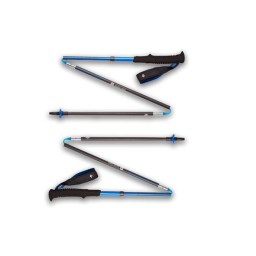
The Black Diamond Distance Carbon Z Trekking and Running Poles are a solid choice for hikers and trail runners who want a pole that packs down fast without feeling flimsy. The Distance Z design folds small and goes up quickly, and the aluminum shafts give it a reassuring sturdiness for everyday mountain use.
At 125 centimeters extended, these poles work well for a wide range of users, while the EVA foam grips and breathable distance straps keep them comfortable on longer outings. Carbide tips and included baskets add enough versatility for dirt, rock and even some snow, so it’s a practical pick for three-season travel.
That said, it isn’t the most adjustable, plush or ultralight option out there. Aluminum is durable, but carbon poles will be lighter, and fixed-length Z-pole designs can be less forgiving than telescoping models if you share gear or want a broader fit range. Still, if you care more about quick deployment, compact storage, and steady support than maximum customization, this one makes a lot of sense.
LEKI Cressida FX Carbon Walking Poles
Material: Carbon | Extended Length: 47.2" | Shaft Material: Carbon fiber | Weight: 0.52 lb
The LEKI Cressida FX Carbon Walking Poles is a good choice for hikers who care most about keeping pack weight and bulk down. Weighing around half a pound, these are easy to carry on long days, and the three-piece folding design shrinks to 15.7 inches, which is handy for travel or slipping into a pack.
The 100- to 120-centimeter adjustment range works for a lot of hikers, and the Aergon Air grip should be a real comfort boost on rough, uneven terrain. It’s a strong fit for day hikers and backpackers who want something light, compact and a bit more premium.
Because this is a specialized, pricier-style pole, casual walkers probably won’t need it. Carbon helps keep the weight down and gives it a rigid feel, but it won’t be as forgiving as aluminum if you’re hard on gear or expect repeated abuse. Still, if low weight and easy storage matter more to you than maximum durability, it’s still worth a close look.
Material: Aluminum | Extended Length: 52" | Shaft Material: Aluminum | Weight: 0.35 lb
The Fizan Compact 3 is a solid choice if you care more about light weight and easy packing than extra cushion. At 5.6 ounces each, these aluminum trekking poles stay very light but still extend to 52 inches, so taller hikers shouldn’t feel cramped.
The three-section setup keeps things straightforward, and the EVA foam grips with rounded tops should be more comfortable on long descents than basic handles. You also get carbide tips, rubber covers, and two basket sizes in the box, so they’re ready for different trail conditions without any extra fuss.
The biggest compromise is that ultralight poles usually give up a little comfort and compactness, and that’s true here. A three-section pole doesn’t collapse as small as a four-section model, so it’s not the easiest option for a tight pack or suitcase. These make the most sense for backpackers, thru-hikers and anyone trying to save ounces; casual walkers or people who want a softer, more compact pole may want to keep shopping. Still, the build choices are sensible, and the price makes them an appealing serious-hiker pick.
Aihoye Hiking Trekking Poles
Material: Aluminum | Extended Length: 52" | Shaft Material: Aluminum | Weight: 0.64 lb
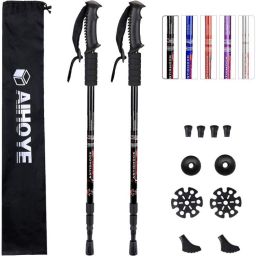
These Aihoye Hiking Trekking Poles are a solid pick for casual hikers, walkers and backpackers who want something light, simple and affordable. Each pole weighs about 10.3 ounces, so they shouldn’t feel cumbersome on longer outings, and the 25- to 52-inch adjustment range should work for most adults and even kids.
The anti-shock spring is useful for taking some of the sting out of rough trails, especially on wrists and knees. Foam and plastic grips keep things practical, and the included tips, baskets and carrying bag add real value without forcing you to buy extras right away.
However, these aren’t built for hard abuse or the most refined feel. They’re a good fit for day hikes, travel and wet or snowy paths, but serious trekkers or frequent mountaineers may want something tougher.
Black Diamond Trail Back Trekking Poles
Material: Aluminum | Extended Length: 55" | Weight: 1.06 lb
The Black Diamond Trail Back Trekking Poles are a good pick for hikers who want simple, dependable poles without paying more for ultralight extras.
They’re aluminum poles with EVA foam grips, FlickLock adjustment and interchangeable baskets, so they cover everything from day hikes to colder shoulder-season trips. The 100- to 140-centimeter range should fit most adults well, and the selling point is practical stability rather than flashy features.
The main tradeoff is that they’re a bit heavy and pretty basic. If every ounce matters, or you’d rather have cork grips and carbon fiber, there are more premium poles worth a look. But they make a lot of sense for casual to regular hikers who mainly want reliable support, easy adjustment and a durable brand-name option.
MSR’s DynaLock Ascent Foldable Carbon Backcountry Trekking Poles
Material: Carbon fiber | Weight: 1.06 lb | Extended Length: 47.2"
MSR’s DynaLock Ascent Foldable Carbon Backcountry Trekking Poles make a lot of sense for backcountry skiers, splitboarders and mountain hikers who care more about light weight and easy packing than a low price.
At 17 ounces, the carbon-fiber build stays impressively light, and the three-piece foldable design tucks away small enough for an alpine pack or travel bag. The DynaLock system is especially handy, with quick deployment, tool-free tension adjustment and 20 centimeters of length range to dial in the fit on the move.
That said, these aren’t the best poles for someone who just wants a cheap, simple pair for occasional walks. Carbon fiber feels a bit more specialized than aluminum, and the folding design adds some complexity compared with basic trekking poles. Still, if you move fast in snowy terrain or need poles that stash without much bulk, they’re worth a look.
What are hiking poles made of?
Two of the most vital parts of a hiking pole’s anatomy are the shaft and the grip. The shaft is the length of the pole, and the grip is the part where you place your hands. When selecting new hiking poles, you’ll want to pay attention to the materials with which the shaft and grip are made.
Hiking pole shaft materials
The material with which a hiking pole’s shaft is made affects the pole’s overall weight, durability under stress, and cost.
-
Aluminum: Hiking poles with aluminum shafts tend to cost less than poles made of other materials. What’s more, they’re revered for their durability. That said, aluminum poles tend to weigh more than other options.
-
Composite: A hiking pole shaft made of composite material consists either partially or entirely of carbon fiber. Carbon hiking poles tend to cost more than aluminum poles, and they weigh less. Those who hike in extremely tough conditions should be advised that a carbon fiber pole could splinter or break under extreme stress.
Hiking pole grip materials
You should pay particular attention to the grip material on your hiking pole. After all, your hands will be in constant contact with the grip while using the hiking poles. Poor grip material can lead to discomfort, hand fatigue, or injury.
-
Cork: Hand grips made of cork conform to the shape of your hand better than other materials. And cork resists moisture, so the sweat from your hands won’t seep into the material. As such, cork hand grips work well in hot weather.
-
Foam: Foam is the softest possible hand grip material. However, it’s not as durable as other materials, and it may absorb sweat from your hands, which some people do not like.
-
Rubber: Rubber hand grips work well in cold weather, as rubber resists temperature changes better than other materials. It also absorbs shock as the poles strike the ground. Notably, because rubber almost sticks to the hand, you may develop blisters when using rubber hand grips in warm, humid weather.
When shopping for hiking poles, you should also pay attention to the diameter and size of the hand grips. If you have small hands, for example, a child’s or woman’s hiking pole may fit your hand better than a unisex pole.
Expert TIp
The proper height for a hiking pole is one that allows your elbow to sit at a right angle while holding the hiking pole’s grips.
BestReviews Fitness Expert
Special hiking pole features
Some hiking poles include more than just a shaft and grip. Manufacturers may add features that make the trek easier or give the pole additional capabilities.
Here are some of the “extra” features you might see on some hiking poles for sale.
Camera mount
Some hiking poles include a screw through which you can attach a camera to the pole. This allows you to use the pole like a monopod and have the camera ready to shoot while you’re hiking.
Compass
You may find a hiking pole with a small compass built into the handle. Such compasses won’t be the most accurate models on the market, but they may help you find your bearings in a pinch.
Locking mechanisms
You’ll use a pole’s locking mechanism to ensure the sections don’t collapse when they’re supporting your weight. You can flip a lever lock or twist a ring to lock the pole’s sections in place.
Shock absorption
For a more comfortable hike, look for a pole that includes shock-absorption technology. These poles have springs built right into the pole.
Shock-absorbing springs work best for downhill hiking.
With some hiking poles, you can disable the springs when hiking uphill or on flat ground.
Expert TIp
Gripping the poles too tightly can cause elbow pain. Place your hands through the strap while gripping the pole to add more stability and a more comfortable grip.
BestReviews Fitness Expert
Adjustable-length vs. fixed-length hiking poles
Many hiking poles sold today include the ability to adjust the length of the pole easily. These are adjustable-length hiking poles. The sections of an adjustable-length hiking pole collapse into each other, much like a telescope. Having this type of pole works well for many reasons.
-
Easy transport: When hiking in areas where you don’t need the poles, an adjustable-length pole can be collapsed down to its minimum length and strapped to a backpack, making it easy to carry.
-
Uphill and downhill assistance: When hiking in terrain that features long uphill or downhill sections, an adjustable-length pole eases the trek. Just make the pole a little shorter on uphill sections and longer on downhill sections.
-
Multiple users: If more than one person will be using the hiking poles, you’ll definitely want adjustable-length poles. This way, each person will be able to adjust the poles to a height that meets his or her needs.
Some people prefer fixed-length hiking poles. These generally weigh less than adjustable poles.
However, potential buyers should realize that fixed-length poles work best when you’re hiking primarily on flat terrain.
Expert Tip
On steep uphill ascents, shorten the poles slightly. This way, you won't need to reach as far to get a good hold on the trail in front of you. On steep downhills, lengthen the poles for stability, and make sure to place them only slightly in front of you.
BestReviews Fitness Expert
Tips
-
To find the best hiking pole length for you, look for one that’s adjustable within 20 to 24 inches shorter than you are. So if you’re 6 feet tall, look for a pole that can be set between 52 and 48 inches in length.
-
Carbon fiber composite hiking poles tend to weigh less than aluminum poles.
-
Many hiking pole designs contain wrist straps specific to the left or right hand. The padding on the grip lines up with the proper hand when you use the matching wrist strap.
-
Use rubber protectors on the tips of the hiking poles to protect the carbide or steel tips. They will last longer this way.
FAQ
Q. How do I know which height is most comfortable for my hiking pole?
A. Before setting the pole length on an adjustable hiking pole, stand as you normally would with the pole tip on the ground. Leave your upper arm at your side, and bend your elbow at 90 degrees. The position of your hand should correspond to the position of the hand grip on the hiking pole. Next, set the length of the pole. You’ll want to set it so that you can hold the grip comfortably in this arm position.
Q. Is a special technique required for using hiking poles?
A. The pole in your right hand should strike the ground at the same time as your left foot. Other than that, you should try to walk as naturally as possible when using hiking poles. Don’t change your stride to accommodate the poles.
Q. How do I clean a hiking pole?
A. You should wipe down the surface of your hiking poles after each use. After a few uses, especially in rough conditions with a lot of dust or moisture, you’ll want to clean the joints with a damp rag. The poles should pull apart slightly to allow you to clean the joints. After this task is complete, dry the areas with a clean rag.
If you see rust stains on any of the clamps or locking mechanisms, spray WD40 on a rag and clean the areas. When not in use, store your hiking poles in a dry place. Follow any additional manufacturer’s instructions for keeping your hiking poles clean.