Buying guide for best lawn dethatchers
Ready to buy now? Shop the best:
Are you frustrated by your lawn looking tired? (Yeah, I know the feeling.) If you're unable to get the lawn of your dreams no matter how much you water it, thatch is likely your problem. Thatch is a layer of dead grass, roots and other organic matter that can build up beneath your lawn's surface. Most people don't even know that this is happening until their lawn looks dead.
That's where a dethatcher comes in. It pulls the buildup out of the ground and gives your lawn the ability to breathe. You only need to do it once, maybe twice a year, but I've learned that it makes a huge difference. The hardest part of dethatching, however, can actually be finding a quality dethatcher that suits your needs.
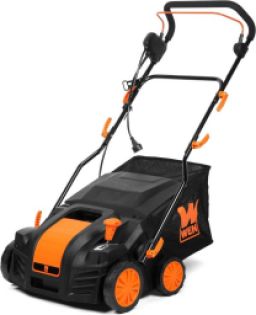
We really like the WEN Electric Dethatcher for that reason. It takes the guesswork out of dethatching, works in both smaller and larger yards, and is fully adjustable to suit the needs of your yard.
How to buy the best lawn dethatcher
In order to buy the best lawn dethatcher for your needs, it’s helpful to first understand a little about thatch and dethatchers.
What is thatch?
Thatch is a layer of organic and inorganic material that builds up on top of soil. The layer may be composed of anything that falls on the yard — leaves, grass clippings, or small debris. Eventually, these materials decay and feed the soil. But that process takes time.
If thatch accumulates faster than it decays, it eventually builds up to the point where it is suffocating the soil and lawn, not nourishing them.
Where does thatch come from?
Thatch occurs naturally. It builds up whenever you mow the lawn or allow leaves to accumulate on the grass. However, if there is poor drainage, too little water, cold soil temperatures, or poor soil aeration, this can cause thatch to accumulate. Chemical pesticides and synthetic fertilizers may also contribute to a persistent thatch problem.
What is a dethatcher?
A dethatcher is a tool that digs into the uppermost layer of your soil, using either flexible tines or rigid claws — depending on the model — and loosens the material that is woven together on top of the soil so it can be removed.
It is important to understand that a dethatcher does not get rid of thatch. You still must do that after it has been broken up. The purpose of a dethatcher, then, is to get the thatch into a state where it can be easily removed by raking.
Dethatching vs. aerating
If you are unfamiliar with the terms, dethatching and aerating can be confusing. Both help your soil and lawn thrive by allowing the soil to breathe, but they accomplish the task in two different yet complementary ways.
Dethatching: As mentioned, dethatching is the process of loosening and removing the layer of organic and inorganic debris that has accumulated on top of your soil. Removing this allows sunlight, nutrients, water, and air to get to the roots of the grass.
Aerating: Aerating is a process that creates small holes in the soil. This relieves soil compaction and lets air, water, and nutrients reach the roots of your plants.
Not every lawn requires either or both processes. Some lawns may not build up thatch; others might never have compacted soil. If you have trouble with both, dethatch first, then aerate. It is possible to purchase a machine that is a dethatcher and an aerator. This can come in handy for homeowners who need to tackle both tasks.
There are three types of dethatchers
When shopping for a dethatcher, you will quickly discover there are three types: manual, electric, and tow-behind. Each has a somewhat specific purpose.
Manual: A manual dethatcher is like a rake with sharper tines. These models require a great deal of physical exertion to use, so they are best for people with small yards. On the plus side, a manual dethatcher gives you excellent control and is a clean way to clear your yard of unwanted thatch.
Electric: If you have a small to midsize yard, an electric dethatcher may be your best option. Because they must be plugged in to work, these models do not have unlimited range. However, they remove almost all the physical effort required by the task. You must be careful to read all directions and set up these models properly as they could do more harm than good.
Tow-behind: If you have a large yard, you need a tow-behind dethatcher. These models attach to the back end of a tractor and dig up the thatch as you drive. They are not kind to your lawn, but in many situations, they are the best way to get the job done. A variation to the tow-behind dethatcher is the front-mount dethatcher. Since it attaches to the front of your tractor, you can clean up the thatch in one pass. On the downside, these models are more expensive and can make it difficult to steer.
What features do lawn dethatchers have?
Depth
The maximum depth for dethatching is a half inch. If you get a model that goes deeper than that, it may damage the root system of your lawn. A dethatcher with an adjustable depth is best so you control how deep the machine goes.
Width
If you have a large yard, you will want a wide dethatcher. This means you will get the task done quicker. The downside of having a wide dethatcher is you won’t be able to get into narrow spaces.
Multipurpose
Some dethatchers do more than one thing. If you want a tool that can dethatch and aerate, look for a model that does both.
Storage
Most of the time, your dethatcher will be in storage. Some models fold down to be more compact; others can be stored on their side to save room. It is important to purchase a dethatcher that fits the storage space you have available.
Other items you may need for lawn care
Thatching is only one task that must be done to ensure a healthy lawn. Here are three other items you can use before and after thatching.
Lawn mower
To achieve the best dethatching results, use a lawn mower to cut your grass to half its normal height before dethatching.
Lawn Aerator
Your soil needs to breathe. After dethatching, use a lawn aerator to make sure your roots can get an adequate supply of oxygen, water, and nutrients.
Grass seed
Sometimes, after dethatching, you will need to patch areas of your yard that were unable to grow. For this, you need a quality grass seed.
How much do lawn dethatchers cost?
Inexpensive
If your yard is small enough that you can use a rake, it will only cost around $30 to $50 to get the tool you need. For around $70 or $80, you may be able to find a budget tow-behind dethatcher. At this price, however, be sure you are purchasing a quality tool.
Mid-range
If you have a mid-size yard, manual dethatching can become too labor intensive. A quality electric dethatcher costs between $129 and $169. There are models that cost more, but if you are only using it once every couple of years and do not have a large yard, it might be hard to justify a higher-priced option.
Expensive
If you have a large yard, a tow-behind dethatcher is your best choice. While some of these models start at less than $100, it’s best to purchase a rugged dethatcher that costs $150 to $250. Another high-end option is a front-mount dethatcher. Because these models require additional hardware for mounting, they can cost upwards of $400.
Tips
- Mow first. Before dethatching, mow your lawn.
- Wait to fertilize. Do not fertilize your lawn before dethatching, as the thatch may trap fertilizer that you end up removing.
- Use the right dethatcher. For a small yard, a dethatching rake is fine. For a mid-size to large yard, use a tow-behind dethatcher or an electric model.
- Know your yard. Before dethatching, make sure you know where all sprinkler heads, irrigation lines, and utility lines are. Avoid these areas.
- Lift up while thatching. When using a manual dethatcher, dig the tines into the thatch and pull up to loosen. If you are doing it right, you will see the thatch separating from the soil.
- Clear away the thatch. After using your dethatcher, you will have clumps of debris covering your lawn. You can clean this up using a leaf rake.
- Patch the bald spots. If there are patches of grass missing after dethatching, overseeding can solve this problem.
FAQ
Q. How much thatch is too much?
A. A little thatch is beneficial. It can help regulate the soil temperature and moisture levels that nourish the root system of your lawn. However, once it accumulates beyond half an inch thick, it can be detrimental. When this happens, the roots of your grass start to curl up, trying to reach areas that have greater nutrients, water, and oxygen. To check how thick the thatch is, use a trowel to dig up a small section of your lawn. Look at the cross section of your grass. If there is more than a half inch of accumulated thatch, it is time to dethatch.
Q. When is the best time to dethatch?
A. To ensure your lawn stays healthy during the process, it is best to dethatch when your grass is growing and the soil is moist. For warm-season grasses, this would make early summer the ideal time to dethatch. If you have cool-season grass, early fall is a much better time to tackle this task. The important takeaway is to never dethatch once your lawn is dormant. If you do, you may damage your lawn beyond the possibility of recovery.
Q. How often do I need to dethatch my lawn?
A. The good part about thatch is it takes a long time to accumulate over half an inch. If your lawn is prone to thatch buildup, you may need to dethatch once a year. If the material in your yard decays as expected, you may only need to dethatch once every few years.
Our expertise
Allen Foster has been researching, testing and evaluating products for BestReviews since 2018. He has also sold outdoor equipment at one of the largest home-improvement chains in the country. Consequently, he has in-depth knowledge of products ranging from chainsaws to lawn mowers to outdoor grills. As part of his training, Allen was required to attend seminars and workshops on a wide variety of outdoor products, so he could help the customer find what they needed.
Jordan Hutchinson has been at BestReviews since 2021, and he now manages people and products for the testing lab. While he specializes in testing, Jordan also writes about trending tech topics. He has extensive knowledge of computers, TVs, speakers and other handheld electronics as well as products for the home and garden that make life better.