Buying guide for best above-ground pool heaters
Ready to buy now? Shop the best:
I can’t think of too many things better than relaxing poolside with friends during the summer. But if you live in a northern climate as I do, where summer lasts just a couple of months, you probably don’t use your pool as much as you’d like.
One way you can extend pool-swimming season in your household is by using a heater. They’re not overly complicated to install, and although some of them are a bit pricey, they’re excellent for swimming comfortably well into September and sometimes even October or November.
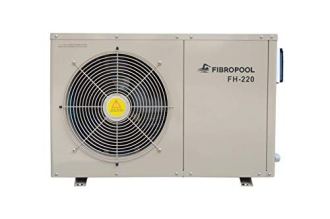
The best units, like the FibroPool Swimming Pool Heat Pump, work well for large pools and deliver excellent heat output without running up your electric bill. If you have an above-ground pool, we’ve got the best picks to make swimming in cooler weather more manageable.
Editors’ picks
FibroPool Swimming Pool Heat Pump
Editors’ Favorite
Heat Output: 55,000 Btu | Dimensions: 40” x 14” x 24” | Max Temperature Setting: 99 degrees | Pool Capacity: 10,000 gallons | Energy Efficiency Rating: 5.92x COP
A high energy-efficiency rating and high heat output make the FibroPool Swimming Pool Heat Pump an excellent option for anyone with a pool up to 10,000 gallons.
You don’t need any gas or propane with this unit, as it works on a standard 240-volt electrical connection. It works well for saltwater pools and features a corrosion-resistant titanium core for long-lasting durability. For every $1 you spend on electricity, you’ll get $5.92 in heat output, which translates to heating a 7,000-gallon pool for just $10 weekly.
Unlike a noisy gas heater, this unit runs quietly and requires no maintenance. The digital control panel makes it easy to adjust and monitor temperature settings, and the weather-resistant housing protects it from rain, snow and intense sunlight.
Fibropool Swimming Pool Heater
Great Value
Heat Output: 20,000 Btu | Dimensions: 36" L x 16" W x 16” | Max Temperature Setting: 99 degrees | Pool Capacity: 5,000 gallons | Energy Efficiency Rating: 4.85x COP
If you have a round above-ground pool up to 18 feet large, the Fibropool Swimming Pool Heater is one of the best long-term options for keeping it warm well into the fall months.
It’s suitable for heating up to 5,000 gallons in just a few hours, and you can set the temperature up to 99 degrees for comfortable swimming even on cooler days. It boasts an industry-leading 4.85 energy-efficiency rating, so it won’t run up your electric bill too much, and the kit includes union connectors and hose adapters for easy installation.
With a compact footprint, this heater won’t take up too much space around your pool and is built for residential above-ground pools and spas. It runs quietly and is one of the most cost-effective solutions for those with a small- to medium-sized pool.
Intex 28685E Above-Ground Swimming Pool Water Heater
Best Solar Mat
Heat Output: Not available | Dimensions: 47.3” x 47.3” | Max Temperature Setting: 90 degrees | Pool Capacity: 8,000 gallons | Energy Efficiency Rating: Not available
Those who don’t want the headache of dealing with complicated appliances will love the Intex 28685E Above-Ground Swimming Pool Water Heater. You don’t have to power it with electricity or gas, and you’ll never run out of heat as long as you leave it underneath sunlight for it to charge.
It works great for pools up to 8,000 gallons and can increase your pool’s temperature by 5 to 9 degrees. It’s compatible with various Intex filter pumps, and it comes with two Type B adaptors for 1.5-inch hose connections.
This six-pack of solar heating mats is one of the most cost-effective ways to heat up your pool during the summer. Although they’re not as effective as electrical-powered units, they won’t run up your electrical bill and do a terrific job at keeping your pools at a comfortable temperature.
Hayward HeatPro Heat Pump
Most Premium & Reliable
Heat Output: 50,000 Btu | Dimensions: 43” x 17” × 30” | Max Temperature Setting: 104 degrees | Pool Capacity: 15,000 gallons | Energy Efficiency Rating: Not available
If performance and reliability are your top two priorities, then you’ll want to consider getting the Hayward HeatPro Heat Pump. With a 50,000-Btu heat output, this heater works well for larger pools up to 15,000 gallons.
It has a maximum heat setting of 104 degrees, so you can swim comfortably even when it’s cooler outside, and the advanced heat-pump technology uses significantly less energy than gas or electric units. The rotary compressor and low-noise fan work together to deliver low noise, and the titanium heat exchanger protects the compressor from corrosion, making it one of the longer-lasting models.
It’s an expensive heater, but if you have a large pool, you’ll need something powerful and reliable like this one to keep it at your desired temperature. Whether it’s hot or cool outside, you’ll swim comfortably whenever this heater is running.
Raypak Above-Ground Pool & Spa Heater
For the Fastest Heating Speeds
Heat Output: 105,000 Btu | Dimensions: 33.8” x 33.8” x 37.8” | Max Temperature Setting: 104 degrees | Pool Capacity: 10,000 gallons | Energy Efficiency Rating: Not available
A slow heater can be frustrating, especially when you have friends over for a swim. That's why the Raypak 105,000-Btu Above-Ground Pool & Spa Heater is so popular for those who need fast heating for larger pools.
It’s the most powerful heater we selected for our top picks, packing a whopping 105,000 Btu per hour of heat output, which makes it well-equipped to handle pools as large as 10,000 gallons. An analog dial makes it easy to adjust the temperature setting, and the motor works fast enough to heat a 7,000-gallon pool in just six hours.
This heater works well for standard above-ground pools and hot tubs, and it features a durable outer shell for added protection against the elements. It’s more expensive than some of our other picks, but a solid choice if you need fast, reliable heating for a larger pool.
How we analyzed
We spent hours researching the top options on the market to narrow down our list to the best models above. We looked at different types of pool heaters — gas, electric and solar — and evaluated their power and efficiency to give you the best value. Because no one wants a complicated setup, we also looked at installation and ease of use and reviewed customer feedback to learn which ones were a cinch to use. We also looked at the build quality and materials of each one to determine durability and longevity.
Benefits of an above-ground pool heater
There are lots of benefits to pairing your above-ground pool with a pool heater. Some are no-brainers, but others are a little less obvious. Here are four key benefits to using a pool heater:
- Longer swimming season: Instead of waiting for a hot day in June or July, you can open your pool as early as April or May and keep it open later into fall, usually into October or even November.
- Comfortable water temperature: Enjoy consistently warm water instead of waiting for the sun to heat it.
- Use your pool more often: Swim on cooler days, evenings and after rainy weather without the water feeling too cold.
- More enjoyable for the whole family: Kids, older adults and guests will feel more comfortable in the water when it's warm.
Key features to consider
Heater type
Gas
Gas heaters are your best bet if you want a unit that heats your pool quickly. They’re great for larger pools and perform well regardless of outdoor air temperature. However, the major drawback is that you constantly need fuel, which is a big expense in the long run. Plus, it’s the least eco-friendly option.
Electric
Electric heaters are energy-efficient units that don’t require maintenance or fuel like gas-powered heaters. They’re also more eco-friendly, but it’s worth noting that they’re fast, and their performance slows in cooler weather. Still, electric heaters are the preferred choice of most residential pool owners.
Solar
If you want the most cost-effective and eco-friendly heater, a solar-powered mat is the way to go. It costs nothing to power them, but heating performance depends on sunlight and weather conditions.
Pool size and Btu output
Btu (British thermal unit) is a unit of heat output, so the higher a heater's Btu rating, the better suited it is to handle larger pools. For reference, a 50,000-Btu heater is well-suited to heating pools of around 7,000 to 10,000 gallons. Heaters with a higher Btu output work faster and more efficiently, but they also use more energy than those with a lower Btu output.
Power and installation
Electrical requirements
Heat pumps typically require a 220- to 240-volt electrical connection and circuitry installed by an electrician. Before buying a heater, it’s best to ensure your home's electrical system can support its voltage and amperage requirements. If in doubt, call a qualified electrician to answer any of your questions.
Plumbing compatibility
A pool heater should be compatible with your pool's existing plumbing and pump system. Check the inlet and outlet connection sizes, recommended water flow rate, and whether the heater is designed for above-ground or in-ground pools. With that information in hand, it’ll be much easier to choose the right heater for your setup and make installation much more manageable.
Climate efficiency
Heat pumps work by drawing heat from the surrounding air, so their efficiency depends on outdoor temperatures. Most models decrease in performance when the ambient air temperature drops below a certain threshold, usually 50 degrees. If you live in a cooler climate or want to swim in early spring and late fall, look for models with low ambient operating ratings or automatic defrost features that perform well even in cooler conditions.
Durability and controls
Materials
If you want the most durable heater, we recommend looking for a corrosion-resistant casing, titanium heat exchangers for saltwater compatibility, and weather-resistant materials that handle sun, rain and inclement weather.
Controls
Most heaters have either an analog dial or a digital control panel for adjusting the desired temperature. Some more advanced heaters also have smart capabilities that let you adjust settings from your phone via an app connected over Wi-Fi or Bluetooth.
FAQ
Q. How much does an above-ground pool heater cost?
A. It depends on the size and type, but most electrical heaters cost anywhere from $800 to $3,000. Solar-powered heaters are more affordable, generally costing $300 to $1,000.
Q. What are the common problems with above-ground pool heaters?
A. Cold-weather performance is a common problem, as most pumps only perform well in moderate ambient temperatures. Weak water flow can also prevent a heater from working properly, and poor electrical setup can cause units to malfunction.
Q. What is the average lifespan of a pool heater?
A. With proper installation and maintenance, most pool heaters can last well over 10 years, with some lasting up to 20. However, it also depends on how often you use it.