Buying guide for best drones
Ready to buy now? Shop the best:
Have you ever watched a movie with a panning birds-eye view shot and wondered how they do it? I'm sure there's a lot of movie magic involved, but when I first saw a drone, I realized I could take similar videos myself.
Drones are kind of like little helicopters that can take photos and record video from astounding heights. They range from entry-level models you can fly quickly and easily to sophisticated machines that take stabilized 4K video or stream a first-person view directly to a wearable pair of goggles or controller.
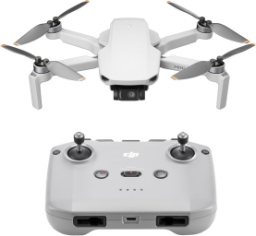
After researching major brands and models, our experts identified the top drones based on price, ease of use and features. Our top pick is the compact DJI Mini 4K, which is lightweight but still powerful enough to capture gorgeous footage.
Editors' picks
DJI Mini 4K
Editors' Favorite
Age Range: Adult | Weight: 246 g | Maximum Range: 10 km | Dimensions: 9.65" L x 11.37" W x 2.2" H | Video Resolution: 4K Ultra HD
If you're looking for an easy-to-use drone that delivers crisp, cinematic video without the hassle of registration, the DJI Mini 4K is a standout pick. We like that it weighs in under 249 grams, meaning it's light enough to avoid FAA registration for recreational use, yet still packs a punch in performance. With a 4K camera on a three-axis gimbal, it shoots smooth, professional-looking footage that holds up well even in breezy conditions.
That said, while battery life is decent at around 31 minutes per charge, it may feel a bit short if you're planning extended shoots; consider the multiple-battery kit if you're serious about flight time.
Still, the overall experience is polished and surprisingly powerful for such a compact drone. If you're after a regulation-friendly drone that balances ease of use with advanced features, the Mini 4K is a solid value with very few compromises.
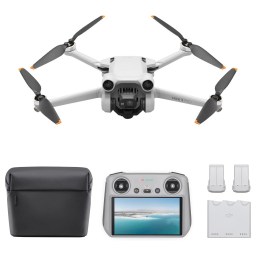
DJI Mini 3
Great Value
Weight: 248 g | Maximum Range: 10 km | Dimensions: 14.2” x 9.9” x 2.8” | Video Resolution: 4K
If you're looking for a first-rate, beginner-friendly drone for under $1,000, there are few better than the DJI Mini 3. Able to record in crisp 4K and boasting Dual Native ISO Fusion, it can capture stunning detail even when it's dark out.
Want to record a waterfall or skyscraper? That's easy, too, thanks to True Vertical shooting. It’s also loaded with other great features, such as QuickShots for choosing dynamic flight patterns and QuickTransfer for transferring files to your smartphone via Wi-Fi.
Weighing just 248 grams, it’s one of the most lightweight, compact DJI drones. It also features an HD-video transmission range up to 10 kilometers and Level 5 wind resistance, so it can withstand gusts as powerful as 38 kph.
Sure, you can find drones with higher resolutions and slicker features, but for beginners, the durable DJI Mini 3 is perfect. Plus, it has a fantastic 51-minute battery life and comes with handy accessories, including two Intelligent Flight Batteries.
DJI Neo Drone
Simple Yet Solid
Age Range: Adult | Weight: 135 grams | Maximum Range: 10 kilometers | Dimensions: 6.18" L x 5.12" W x 1.91" H | Video Resolution: 4K Ultra-Stabilized Video
The DJI Neo Drone is a solid choice for beginners and casual drone users who want high-quality video in a compact, easy-to-use package. We appreciate how incredibly lightweight it is, just 135 grams, which means you don’t need to worry about FAA registration. Despite its featherlight build, it punches well above its weight class with 4K ultra-stabilized video, smooth palm takeoff and landing, and smart tracking features that make it feel more premium than you'd expect at this level.
However, there are some trade-offs. The lack of a traditional remote controller might be frustrating for those who prefer more tactile control, and while it performs well in most situations, compatibility issues with the DJI Fly app on Android could cause hiccups if you're not comfortable sideloading apps.
Still, the subject tracking and QuickShots modes are fun and functional, and the propeller guards give added peace of mind for indoor use or flying near people. Overall, it’s a user-friendly, portable drone that’s hard to beat for casual flyers and content creators just starting out.
DJI Avata 2
Best FPV Drone
Age Range: Adult | Weight: 377 g | Maximum Range: 13 km | Dimensions: 8.35" L x 7.28" W x 2.52" H | Video Resolution: 4K (up to 60fps and 100fps slow-motion)
The DJI Avata 2 delivers an exhilarating first-person flight experience that's hard to match, especially at this price point. Designed with immersive flying in mind, it pairs seamlessly with DJI goggles (sold separately) to put you right in the pilot’s seat. Beginners will appreciate the intuitive motion controls and one-button acrobatics that let you pull off cinematic flips, rolls and drifts without a steep learning curve.
That said, the Avata 2 isn’t a full package right out of the box. You’ll need to buy compatible goggles and a motion controller separately, which can significantly raise the total cost. It’s also a little louder than some camera drones, and its battery life is more limited due to its size and performance focus.
But if you're craving that high-speed, FPV-style flight experience without assembling a custom quad from scratch, this is one of the best ready-to-fly options available.
DJI Air 3S Drone
Best Bundle
Age Range: Adult | Weight: 7.4 pounds | Maximum Range: 20 kilometers | Dimensions: 19.2" x 13.6" x 4.8" | Video Resolution: 4K/60fps HDR
The DJI Air 3S Drone is built for intermediate users who want more than just basic features without stepping into pro-level pricing. What we like most is the dual-camera system, which gives creators greater flexibility in composition, whether you're capturing vast landscapes or tighter subject shots.
The omnidirectional obstacle sensing makes flying in dense or unpredictable environments feel more secure, and the up to 46 minutes of flight time per battery is a noticeable improvement from earlier DJI models.
That said, the Air 3s doesn’t come without a few caveats. While the transmission system is reliable, boasting up to a 20-kilometer range with a stable live feed, some users may find the hefty bundle size overkill. Also, there’s been mixed feedback about build quality versus price.
Still, for those who want more control, stronger visuals and advanced flying features, the Air 3s hits a sweet spot between casual flying and serious aerial production.
DJI Mavic 3 Pro
Excellent Value
Age Range: Adult | Weight: 958 g | Maximum Range: 15 km | Dimensions: 13.68" L x 11.44" W x 4.24" H | Video Resolution: 4K, 5.1K
The DJI Mavic 3 Pro is about as close as you can get to a professional aerial camera without stepping into full cinema drone territory. It’s equipped with a Hasselblad 4/3 CMOS sensor, 5.1K video and a 48-megapixel still resolution, which translates to stunning, high-dynamic-range footage and detail-packed images — even in less-than-ideal lighting.
The three-camera array offers creative flexibility, and features like Waypoint Flight, Cruise Control, and MasterShots automate complex shots beautifully. We also like that it comes with omnidirectional obstacle sensing and APAS 5.0, giving users peace of mind while flying in tricky environments. With a flight time of up to 43 minutes and a strong O3+ transmission system, it handles distance and duration with ease.
This drone is definitely geared toward experienced pilots and creators, and its premium price tag reflects that. While most users report a smooth flying experience and stable performance even in windy conditions, some mixed feedback has surfaced around battery consistency and minor hardware quirks like occasional malfunctioning lights.
Still, if you’re serious about aerial content creation and want cinematic results with maximum control, the Mavic 3 Pro is one of the best-equipped consumer drones on the market.
Key considerations
Know your skill level and why you're flying
Before you drop money on a drone, take a moment to ask yourself: What am I really trying to do with this thing? Are you dreaming of capturing vacation sunsets from the sky, filming high-speed bike trails or producing content that could rival a travel documentary? Your answer will steer you in the right direction.
If you’re brand new to flying, a drone like the DJI Mini 4K or DJI Neo is tailor-made for you; it's lightweight, beginner-friendly and won’t leave you sweating bullets when trying to land it. On the flip side, if you're itching for something more advanced, the DJI Mavic 3 Pro or Air 3s offers serious horsepower and pro-level features, but they also expect you to know your way around the skies. In short: Don’t buy a race car if you’re still learning how to parallel park.
Camera quality isn’t just about megapixels
Here’s the deal: Almost every drone boasts 4K video these days, but not all 4K is created equal. What really separates the casual clips from the jaw-dropping cinematic footage is the sensor, frame rate and lens quality. Think of it like comparing a flip phone camera to a DSLR; technically they both take pictures, but the results are worlds apart.
Take the DJI Mavic 3 Pro, for example. Its Hasselblad camera and 5.1K video make it a powerhouse for serious content creators. If you’re looking to zoom in, crop or color grade in post, you’ll appreciate the extra image depth. But if your goal is to capture smooth, wide-angle shots of a beach day or birthday party, the Neo’s 4K video or Avata 2’s 155-degree POV will more than get the job done.
Size, weight and how much you’re willing to lug around
Let’s be real — if your drone feels like you're hauling around a bowling ball, you're probably not going to reach for it as often. Portability matters more than people think, especially if you’re planning to toss your gear into a backpack and hit the trail. Smaller drones like the DJI Mini 4K or featherweight DJI Neo (just 135 grams!) are perfect “grab-and-go” options. They’re light enough to dodge FAA registration and small enough to fit in a jacket pocket — perfect for spontaneous flights and weekend adventures.
But if you’re chasing those buttery-smooth, cinematic shots with all the bells and whistles, you might need to make peace with a little more bulk. The DJI Mavic 3 Pro, for example, isn’t something you casually toss in your sling bag. It’s a serious piece of kit, and it comes with a serious carrying case to match. The trade-off? You get top-shelf performance.
Flight time and battery life
Few things kill the vibe faster than watching your drone start blinking red when you’re nowhere near finished filming. You’ll get around 43 minutes on the Mavic 3 Pro, which is practically marathon status for drones. Even the Air 3s holds its own with a solid 46-minute battery, letting you stretch your creative legs without constantly babysitting the battery meter.
That said, not every drone is built for endurance. The DJI Avata 2, designed for fast-paced FPV thrills, prioritizes agility over longevity, so expect shorter flights, and pack backup batteries if you’re planning a full shoot.
FAQ
Q. What specs matter most if I want a drone that is easy to learn on?
A. Look for lighter weight, simple launch and landing features, and stable video so the drone feels forgiving in the air. For example, the DJI Neo Drone is just 135 grams and offers palm takeoff and landing, while the DJI Mini 4K Combo keeps things approachable with a 4K camera and compact design. Those kinds of features matter more for beginners than chasing the highest-end camera specs right away.
Q. How important is weight when choosing a drone?
A. Weight affects portability, handling, and sometimes whether recreational flyers need to worry about registration. The DJI Mini 4K and DJI Mini 3 both stay under 249 grams, which makes them easier to carry and simpler to fly for casual use. A lighter model like the DJI Neo 2 can be especially appealing if you want something small enough to bring along often.
Q. What camera features should I prioritize for better-looking aerial video?
A. A 4K label alone does not guarantee great footage, so pay attention to stabilization, sensor quality, and frame rates. The DJI Mini 5 Pro is geared toward more advanced vertical recording needs, while the DJI Avata 2 adds immersive 4K video with up to 60 fps and 100 fps slow motion. If you want smoother cinematic results, those extras can matter as much as resolution.
Q. When does an FPV-style drone make more sense than a standard camera drone?
A. Choose FPV if you care more about an immersive flying experience and trick flying than about a traditional stabilized overhead shot. The DJI Avata 2 is built for that style with motion controls and one-button acrobatics, while the DJI Flip Drone is a more compact option for pilots who want portability with a more playful flight feel. Standard camera drones are usually better if your main goal is straightforward photography and video.
Q. What should parents look for in a drone for younger pilots?
A. For kids, durability, simple controls, and safety features matter more than advanced camera performance. The SYMA X100 Drone for Kids is aimed directly at younger users, while the DCX Volo X EZ AI Drone is another beginner-friendly choice that emphasizes easier flying. A lightweight, easy-to-control model usually helps new pilots build confidence without a steep learning curve.
Q. What are the different types of drones?
A. Drones vary in takeoff ability and their number of rotors. Most non-professional drones are multi-rotor models with four blades that can take off vertically. These can be further divided into racing drones, photography drones and recreational drones. Knowing how you plan to use a drone before you buy will help you narrow your search.
Q. What can drones be used for?
A. Drones can be used for recreational activities like racing or simply enjoying the thrill of flying and exploring. They can also be used for aerial photography and surveillance. Drones can capture perspectives that would otherwise be impossible, and models with a follow-flight feature can track you while you ski, bike or perform other outdoor sports.
Q. What is the range of drones?
A. Most drones have a range of a couple of miles. Some high-end models can reach up to 9 miles. However, you should always keep your drone within eyesight. If you are using a first-person-view drone, have someone else watch the drone.
Q. Where am I not allowed to fly drones?
A. National parks, airports and places with large gatherings of people (like stadiums) are all off limits. You can learn more about flying drones in the United States on the FAA’s guidelines page.
Q. Do I need a pilot license to fly a drone?
A. No, but you do need a Remote Pilot Certificate if you plan to fly in the U.S. Steps and information on how to obtain a certificate can be found on the FAA’s website.
Our expertise
Kevin Luna has a love for all things tech, sports, fitness and gadgets. As a longtime writer for BestReviews, he enjoys writing engaging, high-quality guides to help shoppers make smart buying decisions.
Pete McPherson has written countless buying guides for BestReviews on everything from toys and board games to computers and smart devices. He enjoys helping consumers find the best products to make their lives better.