Menu
 

BestReviews is reader-supported and may earn an affiliate commission. Details

Best Sergers

Updated March 2026
BEST OF THE BEST
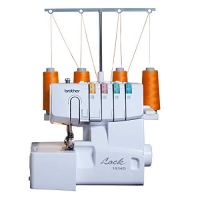
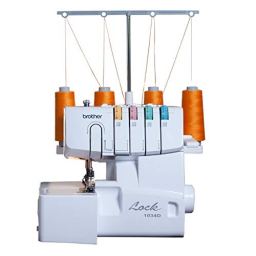
Brother Heavy-Duty Serger
BEST OF THE BEST
Brother
Heavy-Duty Serger
Excellent Value
An affordable serger with a heavy-duty frame for superior durability.
Check Price Check Price

Pros and Cons

PROS
  • It's a three- or four-thread serger with a sturdy interior metal frame that delivers a stitching speed of up to 1,300 stitches per minute.
  • Thanks to a color-coded upper thread guide and lower looper threading system, it's easy to thread.
  • Plus, it comes with three snap-on feet, including standard, gathering, and blind stitch.
CONS
  • The machine gets filled with fabric lint rather quickly.
BEST BANG FOR THE BUCK
Singer S0100 White Overlock Serger
BEST BANG FOR THE BUCK
Singer
S0100 White Overlock Serger
Trusted Brand
Singer has long made dependable, premium sewing products and this serger is no different.
Check Price Check Price

Pros and Cons

PROS
  • It has an up-to-4-stitch capacity and has six different stitching types.
  • Its stitches per minute can hit 1,300, and it has a lower LED light to help you get a clear look at your work.
CONS
  • A few people had issues with their sergers not coming with the accessories it's supposed to have.
Singer Professional Serger
Singer
Professional Serger
Most Versatile
This is a feature-packed serger by a top manufacturer that's perfect for avid sewers.
Check Price Check Price

Pros and Cons

PROS
  • Offers an adjustable tension function and four rolled hem settings.
  • Has simple knobs and dials that are easy to adjust during use.
  • Works fast and produces as many as 1,300 stitches per minute, making it suitable for those who sew frequently and do large projects.
  • Includes a nice accessory set.
CONS
  • Threading this machine can be challenging and time-consuming.
Singer HD0450S Heavy Duty Serger
Singer
HD0450S Heavy Duty Serger
Best for Everyday Use
Whether you're a beginner or an expert, this is a great option for repairing fabrics of all kinds while also being able to progress your skills without the serger holding you back.
Check Price Check Price

Pros and Cons

PROS
  • Allows users to achieve up to 1,300 stitches per minute.
  • A great choice for repairing full bits of clothes or simply making your own.
  • Has 2, 3, 4, or 8 thread count options.
  • Works well for both lightweight and thicker fabrics.
CONS
  • Despite the metal frame, there are still parts that are plastic.
Lumina Moda Serger Overlock Machine
Lumina
Moda Serger Overlock Machine
Best for Beginners
This serger has a color-coded threading guide and adjustable features that make it ideal for both new and experienced sewers.
Check Price Check Price

Pros and Cons

PROS
  • It offers 2-, 3- and 4-thread stitch options.
  • It has adjustable stitch width and length control, making it suitable for a wide range of projects.
  • Its high-speed operation can produce up to 1250 stitches per minute.
  • The color-coded threading guide makes threading the machine quick and easy, no matter your skill level.
CONS
  • Some users find that it occasionally loses tension and needs to be rethreaded.
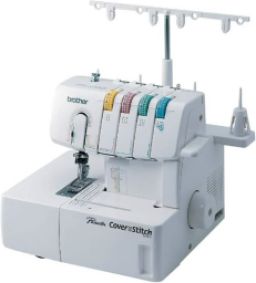
Brother Coverstitch Serger 2340CV
Brother
Coverstitch Serger 2340CV
Best Coverstitch Serger
This serger has a blazing-fast sewing speed and comes with all the accessories you need to create a wide range of cover stitches.
Check Price Check Price

Pros and Cons

PROS
  • It has a differential fabric feed for better stitch quality and a two-needle 2-3-4 thread cover stitch for working with stretch fabrics.
  • It offers cover stitch capability of 3mm and 6mm, chain stitch capability, and easy color-coded threading.
CONS
  • The manual tension release can make it easy to rip the thread of a fabric you're working on.
Janome MOD-8933 Serger
Janome
MOD-8933 Serger
Compact and Capable
Despite its smaller design, this is a great serger for both beginners and experts alike.
Check Price Check Price

Pros and Cons

PROS
  • Has a lay-in system with color coordination to help produce patterned pieces without it getting too confusing.
  • The settings slider is nice for users who are crafting different types of stitches on a regular basis.
  • Quite affordable.
CONS
  • It can be quite loud during use.
Baby Lock Vibrant Serger Machine
Baby Lock
Vibrant Serger Machine
Easy to Use
A compact unit that offers everything beginners need to get started with sewing.
Check Price at Skimlinks View at Skimlinks

Pros and Cons

PROS
  • This unit offers 2-, 3-, or 4-thread serging and has a differential feed that effortlessly increases or decreases the fabric's fullness.
  • The color-coded system is terrific for beginners, and the retractable thread cutter makes slicing fabrics easy.
CONS
  • Although it's great for beginners, this unit can still be a bit tricky to master.
Why trust BestReviews?
BestReviews spends thousands of hours researching, analyzing, and testing products to recommend the best picks for most consumers. We only make money if you purchase a product through our links, and all opinions about the products are our own. About BestReviews  
BestReviews spends thousands of hours researching, analyzing, and testing products to recommend the best picks for most consumers. We buy all products with our own funds, and we never accept free products from manufacturers.About BestReviews 
How We Tested

We recommend these products based on an intensive research process that's designed to cut through the noise and find the top products in this space. Guided by experts, we spend hours looking into the factors that matter, to bring you these selections.

First Reviewed
October 04, 2021
35
Models
considered
14
Hours
researched
Category cover

Buying guide for best sergers

Ade Hennis
Written by Ade Hennis

Updated March 2026

Ready to buy now? Shop the best: 

If you’re serious about sewing, a serger is a great tool to have because it creates overlock stitches using multiple threads. Though a serger is less versatile than a sewing machine, it is the easiest way to create the durable and elastic overlock stitch.

Though a serger is limited in its functions, it works far faster than a sewing machine and gives your creations a tidy and professional look. The number of threads a serger can handle will vary, with most machines ranging from two to four threads. Most machines will include a variety of stitch types by varying the tension and stitch length. You should have a clear idea of what projects you will use your serger for before you pick out a model.

A serger can make a great addition to your arsenal of sewing tools, but it’s a purchase that should be made after careful consideration.

Content Image
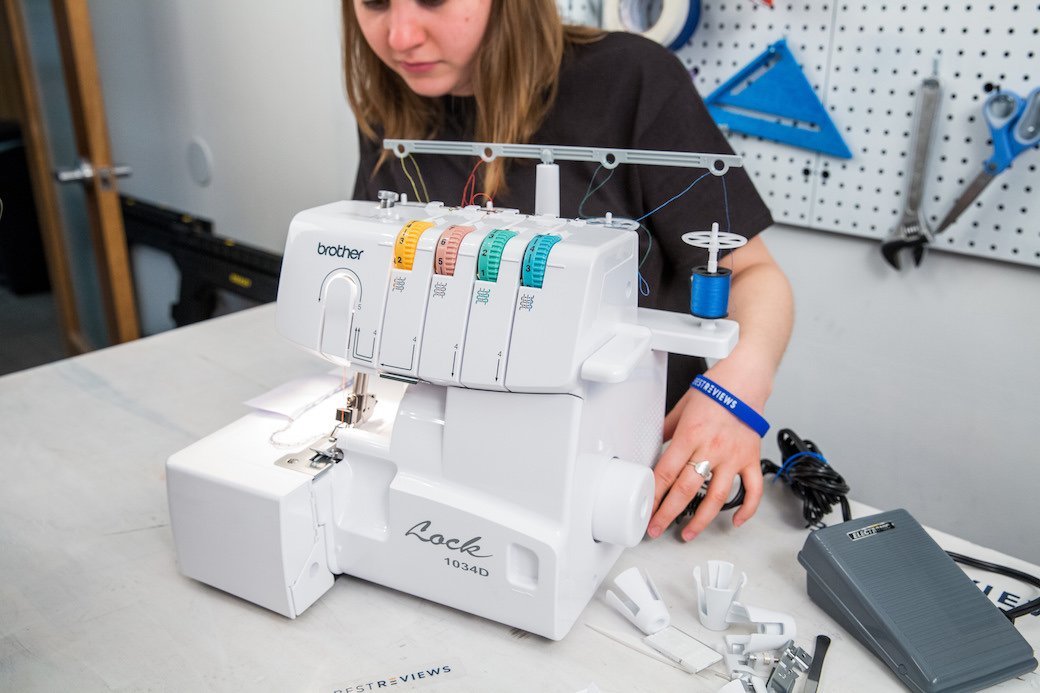
Today's sergers offer a multitude of capabilities in the realm of thread count, stitch variation, tension control, and stitches per minute.

Serger vs. sewing machine

What's the difference between a serger and sewing machine? It's a common question, especially from people looking at these machines for the first time.

  • A sewing machine is a superb all-rounder. It can perform all kinds of tasks beyond just sewing two pieces of material together, but it normally does so with one thread and one needle.
  • A serger, or overlock machine, is a specialist tool. It may have one or two needles and the capacity to sew with anywhere from two to eight threads.
  • Because it uses multiple interlocked threads, there's a certain amount of “give,” or elasticity, in a serger seam. An ordinary sewing machine seam tends to pull at knits and delicate fabrics.
  • A serger can cut excess material away from a seam as you work. The blade is right by the needles, so it makes for a really neat finish. (You can turn it off or remove it if you don’t want this function.)     
  • Sergers work quickly. A typical sewing machine runs at around 600 stitches per minute. The slowest serger featured on our list, the American Home, runs at 1,100 stitches per minute. The fastest on our list, the JUKI, can complete 1,500 stitches per minute.


Even the best serger will not replace your sewing machine entirely. Although they can do it, most are not great for zippers or buttonholes, and no serger can perform top-stitching.

3/4 serger vs. 2/3/4 serger

The numbers above represent the number of threads a particular machine uses to create a stitch. It stands to reason, then, that a 2/3/4 serger offers more stitch variety that a 3/4 serger. However, two-thread stitches are more specialized (you can use them for creating a rolled hem, for example), so for many consumers, a 3/4 machine is all that is needed.

On the surface, that would suggest that the 2/3/4 sergers gives your more choice. But there's much more to choosing the best serger than the number of threads it uses.

Stitch versatility

Professional garment makers tell us that the most important single feature in serger stitching is differential feed. It controls the speed at which your material passes beneath the presser foot. It's vital for creating gathers and for the successful serging of fabrics without pulling. All of the sergers that made our final review have this feature.

A serger gives you control of thread tension and stitch length, but does not necessarily give you control of stitch width. Additionally, most manufacturers will make your life easier by providing a number of pre-sets for things like rolled hems.

Despite the fact that it’s a 3/4 machine, the Brother 1034D offers 22 stitch types, making it by far the most flexible serger of our final five. In fact, although this is a fairly low-cost machine, it's a feature you'll find hard to beat at any price.

Threading complexity

Is a serger difficult to thread? In truth, this can be one of the most intimidating aspects of using a serger. One thread is difficult enough; with a serger, you’ve got four to deal with!

Manufacturers understand this, but unless you're spending thousands of dollars on a professional machine that uses jets of air to blow the threads through, you’ll probably need a little time to get used to the threading process.

Colored thread paths and printed charts can help you along. Instructional DVDs are common, and there are numerous online videos at YouTube and other sites. Some sergers even come pre-threaded, which is great for beginners.

Control

A free arm is a must-have if you work with sleeves and cuffs.

A foot control (similar to what you’d see on an ordinary sewing machine) gives you speed control and keeps your hands free.

All sergers have knives to cut away extra fabric, but the amount of control you have is often minimal.

Useful accessories

Sergers come with a variety of accessories: screwdrivers for changing needles, tweezers, oil, a cleaning brush, a hex wrench, sometimes a pair of scissors.

However, while most of these things are nice to have, it's unlikely you'd find anything in the accessory realm that would “make or break” your serger choice.

Price

How much should you expect to pay for a serger? It's difficult to find a capable all-rounder for under $150, though prices do fluctuate, and there are often sales or promotions you can take advantage of.

Professional sergers can easily cost ten times that amount, though it's our opinion that most home users can get the machine they need for less than $400.

The quality question

Many sergers come from companies you already recognize as makers of sewing machines or other home electronics. Others may not be so well known, but take a glance at these machines, and they look remarkably similar.

So how do you differentiate the good from the mediocre?

  • Owner feedback can be an excellent guide, though you do need to be careful. People are quick to complain but slow to compliment, and that can skew the results.
  • Warranty information is a good indicator of a manufacturer’s confidence in its product. But again, caution is needed. The casing of a machine might have a 25-year warranty, whereas the internals (the parts more likely to break down) may only be guaranteed for 12 months. In some cases, this warranty can be as short as 90 days.     
  • Price also provides an indication of worth. Costlier machines generally have more metal parts inside. Cheaper ones use more plastic. You would expect the former to last longer, but there's no hard and fast rule. A machine’s longevity and durability also depend on how often you use your serger and whether you work primarily with delicate or heavy fabrics.
Content Image
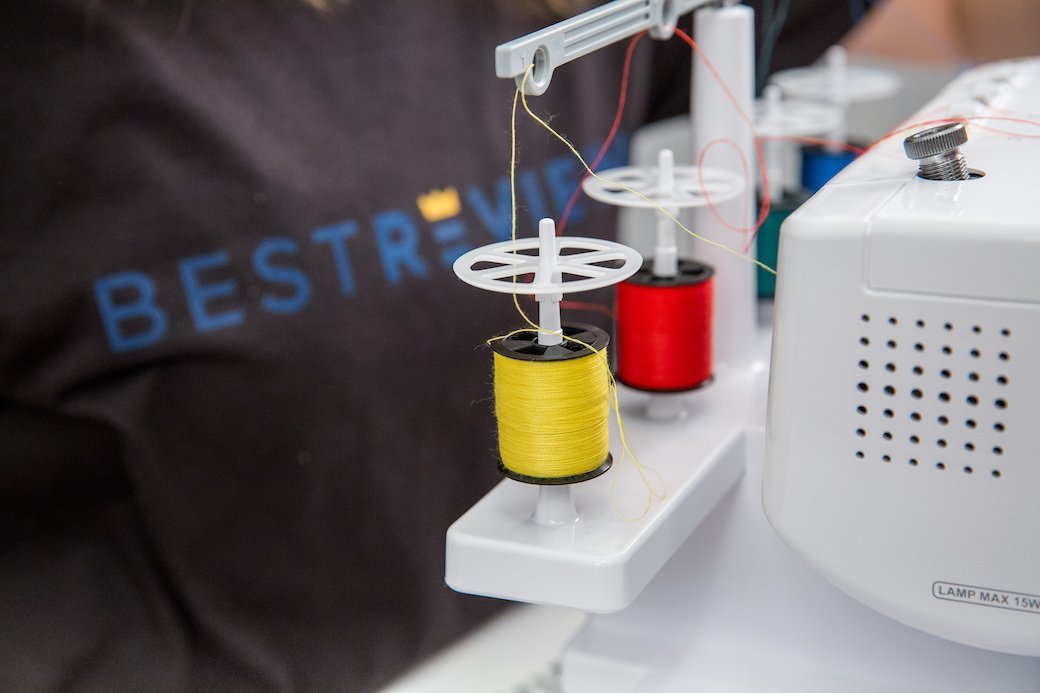
A serger requires different thread than your sewing machine. Resist the temptation to use your sewing machine thread in your serger!
Our Top Picks

BestReviews wants to be better. Please take our 3-minute survey,
and give us feedback about your visit today.

Take Survey