Buying guide for best paint sprayers
Ready to buy now? Shop the best:
A paint sprayer allows you to quickly paint walls, fences, decks and other surfaces without having to handle a brush. Sprayers can be easily maneuvered in any direction and don’t require you to apply constant, even pressure to the surface you’re covering, which means they can help reduce the aches and pains caused by hours of repetitive motion.
While you may think paint sprayers are just for commercial work, many are designed for home use. They don’t need a separate air source, can be powered by a standard wall outlet and don’t usually require any special paint mixing or thinning.
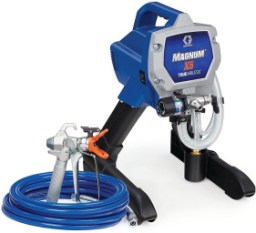
If you have a painting or staining project that you’ve been avoiding, our research shows that the Graco Magnum X5 Airless Paint Sprayer is the best all-around tool for just about any property maintenance job.
Editors' picks
Material: Stainless Steel | Power Source: Adapter | Weight: 17 Ib | Hose Length: 900" (max hose length)
The Graco Magnum X5 is a strong fit if we want to speed up DIY painting without jumping to a full pro-grade rig. It's built for small- to midsize home projects, and it can spray unthinned paint directly from 1-gallon or 5-gallon buckets, which saves you the hassle of mixing and keeps the job moving. With a 1/2 HP universal motor, 0.27 gpm flow rate, and fully adjustable pressure, it handles common work like decks, fences, siding, and smaller homes with more consistency than rollers or brushes.
The flexible suction tube lets you draw paint straight from the bucket, and the 75-foot maximum hose length gives you enough reach to cover exteriors or larger rooms without dragging the unit around constantly. The stainless steel piston pump is another useful sign that this sprayer is meant to handle regular home use and thicker coatings better than many lighter-duty units.
That said, this is still an airless sprayer, so it comes with the usual tradeoffs. The .015-inch maximum tip size and 1/2-horsepower motor make it capable for household projects, but not ideal if you need fast production on very large jobs or want to spray extremely thick materials with minimal fuss. Still, if you want a dependable, flexible sprayer for occasional to moderate use, the Magnum X5 looks like a solid choice.
Material: Brass, plastic | Power Source: Electric | Weight: 2.76 lb | Power: 400 W | Tank Volume: 27 fl oz
The HomeRight Super Finish Max HVLP Paint Sprayer is a practical pick if you want a smoother, more professional-looking finish on furniture, cabinets, trim and other refinishing jobs without setting up a compressor. Its 400-watt electric HVLP design keeps the tool self-contained, and the 2.76-pound weight helps it feel manageable in hand during longer sessions.
The 27-fluid-ounce tank gives you a decent paint capacity for small to medium projects, and the brass 2-millimeter tip is a nice touch because it should hold up better than a cheaper plastic nozzle and help with more consistent spray output.
You can change the spray pattern to horizontal, vertical or round, which makes it easier to work on broad cabinet doors, narrow trim or detail areas without constantly fighting the tool. The included viscosity cup is useful too, but you still need to thin the material properly and test your settings before you start on the final piece.
Overall, we see the Finish Max as a solid budget pick for DIY users who want better-than-brush results without jumping into professional spray equipment.
Material: Plastic | Power Source: Electric | Weight: 9.5 Ib | Hose Length: 300"
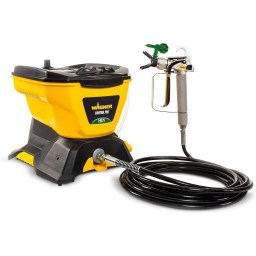
The Wagner Control Pro 130 is built for large interior and exterior jobs and can spray up to three times faster than a roller. With a 1.5-gallon tank and a 25-foot hose, you can cover more surface before stopping to refill, which is especially helpful for fences, decks, sheds, siding and bigger rooms. At 9.5 pounds, it’s light enough to move around without feeling cumbersome, and the plastic body helps keep the weight down.
The part that stands out most is the HEA (high-efficiency airless) system. Wagner says it cuts overspray by up to 55%, which should help you waste less paint, spend less time masking and keep cleanup more manageable. The softer spray pattern should also make it easier for you to get a smoother finish, especially if you are still getting used to a sprayer. That said, it still takes some practice; if your movement or distance is off, you can still get drips, runs or uneven coverage.
Overall, if you want to tackle larger paint jobs efficiently and you’re willing to spend a little time learning the setup and cleanup process, this sprayer is a great pick.
Material: Stainless Steel | Power Source: Adapter | Weight: 13 Ib | Hose Length: 600"
The Graco Magnum Project Painter Plus is a practical DIY airless sprayer for homeowners who want to cover more ground than brushes or rollers can handle. Its main advantage is that it sprays unthinned paint or stain, and the fully adjustable pressure control lets you dial in the output for different jobs.
That makes it a good fit for ceilings, fences, decks and shed exteriors where speed matters more than fine-detail precision. The flexible suction tube also lets you draw directly from a 1-gallon or 5-gallon bucket, which cuts down on refills and keeps larger projects moving.
At 13 pounds, it's heavy enough to feel sturdy but still manageable for a DIY sprayer. The compact 12-by-13.5-inch footprint should also make it easier to store than a bulkier contractor-style unit. The stainless steel construction and included spray gun, tip, hose, storage fluid, adapter and guides add to the value if this is your first serious sprayer.
That said, this is still a beginner-friendly tool, not a pro finish machine, so it helps to keep your expectations realistic. Airless spraying is fast, but it can also create more overspray than rolling. We think this is a smart pick if you want faster coverage, strong hose reach and a simpler workflow for indoor or outdoor painting jobs.
Material: Plastic | Power Source: AC | Weight: 3.7 lb | Hose Length: 71"
The Vonforn Paint Sprayer comes with four nozzle sizes (1 mm, 1.5 mm, 2 mm and 3 mm), giving you real flexibility. You can use a finer tip for thin finishes or move up for thicker coverage. The three spray patterns are helpful, too, letting you switch between horizontal, vertical and circular spray for flat panels, trim or awkward shapes.
What stands out most is how much this model focuses on setup and cleanup convenience. The dust blowing joint helps clear debris off a surface before spraying, and the cleaning connector makes it easier to flush leftover paint from the system afterward. That matters, since cleanup is often the most frustrating part of using a sprayer. You also get a cleaning brush, nozzle needle, filters and a manual to help with maintenance.
Overall, this seems like a solid choice for homeowners and casual DIY users who want a versatile paint sprayer without a complicated setup.
Tank Volume: 2 gal | Material: Stainless steel | Power Source: Corded electric | Hose Length: Not specified | Weight: Not specified
Graco TrueCoat 360 Variable Speed Paint Sprayer looks like a solid fit for DIY projects that stay within a 2-gallon range. It's built for painting doors, trim, interior walls, fences, garage doors and outdoor furniture, and it should save time compared with brushing or rolling. The stainless steel piston pump and 1,500 psi max pressure are the big practical selling points, especially because it can spray paint or stain unthinned. The 1-10 Project Pace Control also matters here, since it gives you a way to slow things down for trim work or speed up for broader surfaces when you want more coverage.
What makes this model appealing is the convenience-focused design. The FlexLiner System is meant to simplify filling and cleanup, which is a real advantage if you plan to use it for multiple small projects over the year. The VacuValve spray-any-direction feature should help when you are working around corners, awkward angles or overhead surfaces. We also like the promise of less overspray, because that can make a noticeable difference when you're spraying near finished floors, windows or furniture. For homeowners who want a cleaner finish without moving up to a larger sprayer, that combination is very useful.
The main limitation is capacity. A 2-gallon tank is fine for smaller jobs, but it will feel restrictive if you are tackling larger walls, multiple rooms or a whole-house repaint. Because it's corded, you also need to plan around an outlet and likely an extension cord, so it's less flexible than a battery-powered option.
Still, for small to medium DIY work, this looks like a practical handheld airless sprayer that offers better finish quality than a brush or roller with less mess and prep than many larger systems. Since there are no captured customer reviews here, we cannot judge long-term reliability from buyer feedback, but the design itself points to a tool that prioritizes control, cleaner spraying and easier project handling.
Tank Volume: 40 fl oz | Material: Plastic | Power Source: AC/DC | Hose Length: 11.5' | Weight: 14.6 lb
The Wagner Spraytech FLEXiO 5000 sprays most unthinned latex and oil-based paints, plus primers, stains, sealers and urethanes, so you can usually go straight from the can instead of spending time thinning and testing viscosity. The stationary turbine base keeps the weight off your hand, and the 11.5-foot hose makes the 14.6-pound unit easier to manage during longer projects on walls, fences, decks and cabinets. The tradeoff is that this is still a plastic, corded system, so it makes more sense for home use than for rough daily jobsite work.
What makes this model especially useful is the two-nozzle setup. The iSpray nozzle is better for broader coverage on siding, doors or larger furniture pieces, while the Detail Finish nozzle gives you more control for cabinets, trim and other tighter areas. That said, the FLEXiO 5000 still has a learning curve, and you’ll likely need a few test passes on scrap before you get a smooth finish.
Overall, this looks like a strong value for homeowners who want faster painting with less arm fatigue and more flexibility across different projects.
Tank Volume: 1.5 gal | Material: Plastic | Power Source: AC/DC | Hose Length: 300" | Weight: 9.5 lb
The Wagner Spraytech 2467899 Control Pro is a solid pick if you’re tackling larger paint or stain jobs, like fences, decks, sheds or full interior walls, and want something faster than rolling. Its HEA (High Efficiency Airless) system is the main selling point: It’s designed to cut overspray by up to 55% and produce a softer, more controlled spray pattern, which matters when you’re working near trim or other areas where cleanup can get messy.
The hardware is set up for reach and steady output rather than portability in the handheld sense. The 1.5-gallon stationary tank lets you keep spraying without stopping to refill as often, and the 25-foot hose gives you room to move around without dragging the unit everywhere you go.
The tradeoff is that this still looks more like a homeowner or serious DIY tool than a heavy-duty commercial sprayer. The plastic construction and compact tank size suggest it’s built for convenience and moderate project use, not all-day industrial abuse. Still, it's a solid option if you want cleaner, faster coverage without jumping to a more expensive pro-grade machine.
Tank Volume: 5 gal | Material: Stainless steel | Power Source: Corded electric | Hose Length: 1,200" | Weight: 26 lb
The Graco Magnum X7 Airless Paint Sprayer feels like a practical step up if you’re tackling small to midsize painting jobs and want to move faster than you can with a brush or roller.
Its 5-gallon capacity, corded electric power, stainless steel piston pump and 3000 psi max pressure make it capable of spraying unthinned paint on interior walls, exterior siding, fences and decks. At 26 pounds, it’s still manageable to move around a jobsite or carry between rooms.
What stands out most is how much control you get for a sprayer in this class. The fully adjustable pressure lets you dial down for trim and lighter work or turn it up when you need to cover larger surfaces. The PowerFlush adapter also helps, as you can connect it to a garden hose for faster cleaning, but you should still expect a thorough cleaning after each use.
Overall, we’d call the Magnum X7 a solid option for homeowners and handymen who paint often enough to benefit from speed and consistency.
What to know before you buy a paint sprayer
Types of paint sprayers
There are three basic types of paint sprayers available today, each with its pros and cons.
High-volume, low-pressure (HVLP): These paint sprayers use a high volume of air to push paint through the tip and a low-pressure air stream for a mist-like spray pattern. They work best 6 to 8 inches from the surface you’re covering. This type of sprayer offers the best control because you can adjust the amount of paint that goes through the tip. HVLP sprayers are ideal for detailed projects like cabinets and doors. Their simple design also makes them easier to clean than other types.
However, low-pressure painting can be slow. If you have a large area to cover, you might need something more powerful. HVLPs don’t perform as well as other types when using lacquer or thick paint.
Conventional/compressed air: These paint sprayers use an air compressor to push paint through the tip. Inexpensive conventional sprayers are easy to use and they cut down on painting time.
These sprayers don’t offer as much control as HVLP or airless sprayers. Also, the size and power of the compressor will greatly affect the performance. If your compressor is too small, the paint job could be spotty. Pick a compressor that’s too big and you could use more paint than necessary.
Airless: These sprayers use high pressure to pump out paint and can effectively cover a large area in a short amount of time. Airless paint sprayers can be powered either by electricity or gas. Adjusting the pressure lets you customize coverage, producing results that are often indistinguishable from a professional job.
On the downside, controlling the spray pattern can be difficult. This type of sprayer works best for large jobs like painting a long fence or the exterior of a house. Due to the difficulty of adjusting the spray pattern and the noise of these sprayers, they aren’t ideal for detailed jobs or indoor work. Also, airless paint sprayers can’t spray paint that has any grit or texture.
Viscosity
Some paint sprayers can only function properly when the liquid you’re using has a certain viscosity, or thickness. This requires careful thinning of the paint to ensure that the sprayer won’t clog and will yield the best possible results.
If you want the most convenient option, opt for a sprayer that doesn’t require this process. Manufacturers are happy to advertise this time-saving feature, and most sprayers worth purchasing have motors powerful enough to spray paint at the thickness it comes in with no additional chemical mixing needed.
Tips
The type and size of the sprayer’s tip can make a big difference in the overall success of your painting project. Some sprayers can only work with one tip size, while others can use different tip sizes. Thick paint like exterior latex requires a larger tip; stains require a smaller tip. Always follow the tip size recommendations found in the owner’s manual for best results.
Tips also come in different widths of the spray pattern, varying from 6 to 14 inches. If you’re painting an exterior or interior wall, a wider spray pattern will cover more area at once. When spraying a ceiling or house exterior, look for a sprayer that can accommodate a tip extension.
Many sprayers have a variable tip that can be rotated to change the shape of the spray pattern. This lets you move from horizontal to vertical painting with a click or two.
Additional features
Hose length: A long hose eliminates frustration and speeds up a big paint job. When painting a house, a 25-foot extendable hose means more time spent spraying and less time moving the sprayer. You can buy longer hoses for some sprayers, but check the manual to make sure that the length you want is compatible with your model of sprayer.
Coating type: Some coatings work best with certain sprayers. Exterior latex paint needs the bigger tips that are usually found on conventional or airless sprayers. You might need to thin the paint in order to use it in an HVLP sprayer. Check the owner’s manual for your sprayer.
Pressure control: Paint sprayers with pressure control allow you more flexibility when it comes to the way the paint is delivered and prevent you from wearing out the spray tips prematurely. Higher pressure sprays more paint but results in more overspray, while too little pressure costs you time. Most painters recommend that you first practice on scrap material so you can dial in the settings that work best for your project.
Portability: Depending on the type of job, the portability of the sprayer can be important. If you need to move your paint supply and sprayer repeatedly over the course of your work, handheld and cart sprayers are good options.
Tips for using a paint sprayer
- Clean the paint sprayer thoroughly after each use. Keeping your sprayer clean is critical. Paint or stain allowed to dry inside the tool will reduce its performance and could even ruin it. Most portable paint sprayers can be disassembled and soaked in soapy water or mineral spirits. Some high-powered models can connect directly to a garden hose for flushing out material. Consult the owner’s manual for best practices.
- Wear eye and ear protection while using a paint sprayer. The use of a respirator is required if painting indoors and highly recommended outside too, because even a slight change in the wind can leave you breathing in atomized paint or stain.
- Dispose of contaminated water or excess paint properly. Old paint or stain is considered hazardous waste and must be disposed of in an environmentally friendly way. Never pour it down the drain or any grate or sewer that drains into bodies of water.
FAQ
Q. How much do paint sprayers cost?
A. You can purchase a portable, handheld paint sprayer for as little as $60. However, these inexpensive tools are best used for small, quick projects like a half bathroom or piece of furniture. When it comes to projects like walls, ceilings, decks or sheds where a paint sprayer’s efficiency really comes into focus, expect to spend $250 to $700 on a tool that is functional and powerful enough to expedite your progress.
Q. Are paint sprayers loud?
A. Generally, yes. While an electric sprayer is quieter than one connected to a professional-grade pneumatic compressor, it’s still about as loud as the average vacuum cleaner. Ear protection is advised.
Q. I’ve heard of people using a paint sprayer to apply spray tan. Is this true?
A. Believe it or not, yes. Some people have discovered that a portable paint sprayer works wonders for applying an even faux tan. Be sure to follow the tanning product’s instructions carefully with regard to your safety and, if possible, apply it outdoors to prevent giving your entire bathroom or shower a golden glow.
Q. Can I use any kind of paint in a sprayer?
A. For the most part, yes. Water-based, oil, lacquer, enamel and acrylic paints can all be sprayed, but gloss paint should be avoided. It contains chemicals that are extremely hazardous to inhale, and successfully achieving a perfect, glossy finish requires a pristine, dust-free environment that’s impossible to achieve outdoors or in a home.